The ROI of Double Glazing.
Published on doubleglazingquote.net | Last updated: 2026
With energy bills still biting hard and the cost of living continuing to dominate kitchen-table conversations across the country, UK homeowners are scrutinising every home improvement spend more carefully than ever. Double glazing sits at the top of many upgrade lists — but is it genuinely worth the investment, or is it a decades-old piece of received wisdom that no longer stacks up financially?
This guide breaks down the real numbers: what you’ll spend, what you’ll save, how your property value is likely to shift, and critically — when double glazing might not be the right call at all.
1. The Investment: What Does Double Glazing Actually Cost?
Let’s start with the headline figure. For a typical three-bedroom semi-detached house in the UK, a full double glazing installation — covering all ground and first-floor windows — will set you back in the region of £6,000. This figure accounts for uPVC frames across approximately eight to ten windows, including labour, disposal of old frames, and VAT.
Costs will naturally vary. A detached four-bedroom property could push past £10,000, while a one-bedroom flat might come in well under £3,000. Frame material plays a significant role too: aluminium frames carry a premium over uPVC, while timber frames are typically the most expensive option due to the additional craftsmanship involved.
It’s worth noting that since April 2022, HMRC reduced the VAT rate on energy-saving materials — including energy-efficient windows — from 20% to 0% for installations in residential properties in Great Britain. This represents a meaningful saving on any full-house installation and is something many homeowners are still unaware of.
If upfront cost is a concern, there are several routes worth exploring. You may qualify for grant assistance through energy efficiency schemes — see our guide to double glazing grants in 2026 — or spread the cost through window finance options if purchasing outright isn’t viable right now. For a full breakdown of what drives installation costs, our double glazing costs in the UK page covers regional variations in detail.
When obtaining quotes, always confirm your installer holds certification from either FENSA or Certass. These competent persons schemes mean your installation is self-certified as compliant with GOV.UK Building Regulations, removing the need for a separate local authority inspection and giving you the documentation needed when you come to sell.
2. Energy Savings: The Annual Dividend
This is where expectations need careful calibration. The Energy Saving Trust — the most authoritative independent source on domestic energy efficiency in the UK — estimates that replacing single-glazed windows with A-rated double glazing in a typical semi-detached home can save approximately £135 per year on energy bills.
That figure accounts for reduced heat loss through the glass and frames, meaning your boiler works less hard to maintain a comfortable indoor temperature. It’s a genuine, tangible saving — but it’s not a transformative one in isolation.
Several factors influence how much you personally save:
- Your current windows: If you already have older double glazing from the 1990s or early 2000s, upgrading to modern A++ rated units may save considerably less than replacing single glazing — the incremental gain is smaller.
- Your heating habits: Households that run their heating frequently and at higher temperatures will see the most noticeable difference.
- Property size and construction: Larger properties with more glazed surface area will save more. Older, leakier properties often benefit disproportionately.
- Orientation: North-facing rooms lose more heat through windows and stand to gain more from high-performance glazing.
The Glass and Glazing Federation (GGF) and independent analysis from GreenMatch broadly support the Energy Saving Trust’s figures, though some estimates skew higher when accounting for triple glazing upgrades or whole-house retrofits in older stock.
3. Property Value: What Does the Market Actually Pay?
Here is where the financial case for double glazing becomes considerably more compelling — particularly for homeowners approaching a sale.
Research from the BRE Group, the UK’s foremost building research establishment, alongside broader market data, suggests that improving a property’s Energy Performance Certificate (EPC) rating can increase its market value by 1.5% to 3%. On a property valued at £300,000, that translates to an uplift of between £4,500 and £9,000.
This is not simply theoretical. Estate agents consistently report that EPC rating is increasingly factored into buyer decision-making, particularly among first-time buyers who are acutely conscious of ongoing running costs. With mortgage lenders beginning to offer preferential rates on properties with strong EPC ratings, the financial incentive for buyers to prefer well-glazed properties is only growing.
According to data from Which?, windows are among the most visible and immediately assessed features during a property viewing — buyers notice poor glazing almost immediately, and it creates a negative halo effect on their perception of the property’s overall condition and maintenance history.
For context, MoneySavingExpert notes that with 33% of homeowners currently choosing to “improve, not move” — opting to invest in their existing home rather than trade up — the demand for quality installations that meaningfully enhance both liveability and resale value has never been higher.
4. EPC Rating Improvement: The Band Uplift Effect
Energy Performance Certificates rate properties on a scale from G (least efficient) to A (most efficient), and double glazing is one of the most impactful single measures for moving up the bands.
In most cases, replacing single-glazed windows with modern double glazing improves a property’s EPC rating by one to two bands — for instance, moving from an E to a D, or a D to a C. This matters for several reasons beyond property value:
- Minimum Energy Efficiency Standards (MEES): If you let your property, it must meet at least an EPC E rating. Future regulatory tightening is widely expected, making proactive improvement sensible.
- Green mortgage eligibility: Several major lenders now offer reduced rates for properties rated C or above — a direct financial benefit linked to your EPC banding.
- Government retrofit funding: Many grant schemes prioritise homes below a certain EPC rating, meaning improving your band may also make you eligible for further funded measures.
The EPC assessor will take into account the U-value (thermal performance) of your new windows, the frame material, and the gap specification when calculating your new rating.
5. Comfort and Noise Reduction: The Non-Financial ROI
Not every return on investment appears on a spreadsheet, and for many homeowners, the qualitative improvements from double glazing are ultimately more persuasive than the energy saving numbers.
Thermal comfort is the most immediate benefit. Draughts from ageing single-glazed windows are eliminated, cold radiation from glass surfaces in winter is dramatically reduced, and rooms maintain a more consistent temperature throughout the day. This is particularly meaningful for households with elderly residents, young children, or those who work from home.
Acoustic performance is the second major qualitative benefit, and one that is increasingly valued in an urbanising country. The World Health Organisation’s environmental noise guidelines for the European Region identify road traffic noise as a leading environmental health concern, linked to sleep disruption, cardiovascular stress, and cognitive impairment. Modern double glazing with laminated inner panes or wider air gaps provides measurable noise attenuation — typically reducing intrusive external noise by 25 to 35 decibels. For homes near busy roads, railway lines, or flight paths, this alone can justify the investment.
Condensation reduction is a related benefit: modern double-glazed units with warm-edge spacer bars maintain a higher glass surface temperature, significantly reducing the condensation that causes mould, draughty feelings, and damage to window reveals and soft furnishings.
Security rounds out the package. Multi-point locking systems and toughened or laminated glass in contemporary double glazing installations provide substantially greater resistance to forced entry than timber-framed single glazed windows.
6. Payback Period: A Realistic Assessment
The honest answer on payback period for energy savings alone is: it takes time. At £135 per year in savings against a £6,000 outlay, the pure energy payback period is approximately 44 years — far beyond the expected lifespan of the windows themselves (typically 20 to 25 years for quality uPVC).
A more realistic framing for a 15-to-20 year payback horizon looks at the combined returns:
| Benefit | Estimated Value |
|---|---|
| Energy savings over 20 years | ~£2,700 |
| Property value uplift (1.5% on £300k home) | ~£4,500 |
| EPC-linked mortgage savings (estimated) | ~£500–£1,500 |
| Total estimated return | ~£7,700–£8,700 |
Against a £6,000 outlay, this represents a credible total return — particularly when the property value uplift is factored in. The payback is not primarily driven by energy bills; it’s driven by what buyers will pay for a warm, well-maintained, efficiently-rated home.
7. Double Glazing ROI vs Other Home Improvements
It’s worth contextualising double glazing’s ROI against other popular home improvements. Loft insulation, for example, offers faster payback — costs are lower and savings per pound invested are higher. Cavity wall insulation follows a similar pattern.
A well-designed conservatory, according to research by the GGF and broader property market analysis, can return 100% ROI when it adds usable living space that translates directly to floorplan square footage — though this depends heavily on quality, orientation, and the existing property type.
A new kitchen or bathroom can add immediate visual appeal but typically delivers inconsistent returns depending on specification and buyer expectations in the local market.
Double glazing’s advantage is consistency: it contributes to EPC rating, buyer confidence, reduced running costs, and comfort simultaneously. It is rarely the highest-returning individual improvement, but it is one of the most broadly impactful.
8. When Double Glazing Is NOT Worth It
Honest advice requires acknowledging the scenarios where replacing or upgrading windows doesn’t make financial sense.
You already have modern double glazing. With 93% of UK homes already having some form of double glazing according to GGF data, many homeowners considering an upgrade are starting from a position of existing provision. If your current windows were installed within the last 10 to 15 years and are in good repair, the incremental energy saving from upgrading to newer units is likely to be minimal — perhaps £30 to £50 per year. The payback period in this scenario stretches to an impractical length.
You’re planning to sell within two to three years. While double glazing does add to property value, the uplift rarely exceeds the installation cost in short time horizons, particularly in subdued market conditions. If a sale is imminent, your estate agent’s assessment of buyer expectations in your specific local market is the most reliable guide.
Your property is listed or in a conservation area. Double glazing in traditional aluminium or uPVC may not be permitted on listed buildings or properties in designated conservation areas. In these cases, Historic England recommends secondary glazing as the most appropriate solution — installed inside the existing window reveal, it preserves the external character of the building while delivering meaningful thermal and acoustic improvement.
The budget would deliver better returns elsewhere. If your property is uninsulated at loft or cavity wall level, addressing those measures first will typically deliver stronger energy savings per pound spent. Double glazing is most valuable as part of a coherent whole-house efficiency improvement, not as a standalone measure in an otherwise under-insulated home.
The Verdict
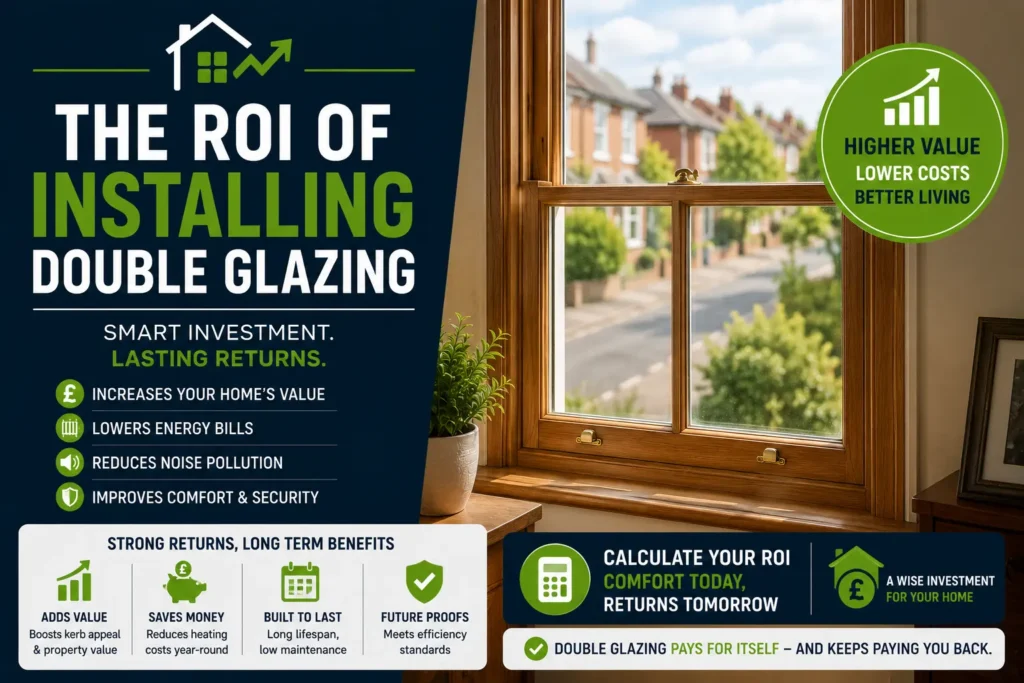
Double glazing is worth it for the majority of UK homeowners replacing single-glazed or significantly ageing windows — but not primarily for the reasons often cited. The energy savings alone rarely justify the investment on a pure payback basis. The real case rests on the combination of property value enhancement, EPC band improvement, improved comfort and liveability, and the long-term savings that compound across the life of the installation.
For homeowners in properties with single glazing, poor EPC ratings, or significant noise intrusion, the argument is particularly strong. For those upgrading relatively modern existing double glazing, the calculus is less clear-cut.
As with any significant home improvement, the quality of what you install — and who installs it — matters enormously. Use FENSA- or Certass-certified installers, insist on A-rated or above window energy ratings, and obtain at least three comparable quotes before committing.
Further Reading:
- Double Glazing Costs in the UK
- Double Glazing Grants 2026: Eligibility & Savings Explained
- Window Finance Options
Sources: Energy Saving Trust | GOV.UK Building Regulations | HMRC VAT on Energy-Saving Materials | FENSA | GGF | Certass | Which? | MoneySavingExpert | GreenMatch | WHO Environmental Noise Guidelines | BRE Group | Historic England