What to Expect During a Double Glazing Installation: The Complete UK Homeowner’s Guide
By Kevin Cee / Updated for 2025
If you’ve decided to upgrade your home with double glazing, the process involves far more than simply booking a fitting day. From the moment you sign your contract to the moment you receive your compliance certificate, there’s a clear sequence of events – and knowing what to expect at every stage makes the whole experience considerably less stressful.
This guide covers everything: realistic lead times, a day-by-day installation timeline, your legal rights under the Consumer Rights Act 2015, FENSA and Certass certification, Building Regulations compliance, a completion sign-off checklist, and exactly what to do if something goes wrong.
⚡ Quick Takeaways
- 94% of UK homeowners use professional installers – and Building Regulations make this the right call
- Expect a 6-12 week lead time between order and installation day
- Most installations complete in 1-3 days
- Your installer must issue a FENSA or Certass certificate within 30 days of completion
- The Consumer Rights Act 2015 protects you if work is substandard – know your escalation steps
- Use the completion checklist in this guide before you sign off on the job
Why Professional Installation Matters
According to consumer research, 94% of UK homeowners choose to hire professional installers for double glazing rather than attempting DIY fitting. That figure isn’t surprising – double glazing installation is a notifiable building work in England and Wales, meaning it must comply with Building Regulations Part L (conservation of fuel and power) and Approved Document K (protection from falling, collision and impact – including glazing safety). Getting it wrong isn’t just inconvenient; it can affect your home’s energy rating, your insurance, and your ability to sell.
Professional installers registered with a competent person scheme – either FENSA or Certass – are authorised to self-certify their work as compliant, eliminating the need for a separate local authority building control application. This matters enormously when the time comes to sell your home, as solicitors will request proof of compliance as standard.
For a deeper breakdown of what these certificates mean for you, see our guide: FENSA and Certass Certificates: What Homeowners Need to Know.
Realistic Lead Times: What Happens Before Installation Day
One of the most common frustrations homeowners encounter is not the installation itself, but the wait beforehand. Unlike off-the-shelf products, double glazed windows are manufactured to your exact measurements.
The typical manufacturing lead time is 6 to 12 weeks from the date of your order confirmation. This varies depending on:
- The style and complexity of the frames (bay windows or shaped units take longer)
- The glass specification (acoustic, self-cleaning, or triple glazing may add time)
- The installer’s current order volume and supplier relationship
- Seasonal demand peaks (autumn tends to be the busiest period)
Industry analysis from Insight Data’s fenestration market report confirms that UK glazing manufacturers have faced sustained demand pressure since 2020, making forward planning increasingly important. The KBB Review’s research on the improve-not-move trend also highlights that home improvement investment has remained robust, meaning installer diaries fill quickly.
Before your installation date, you should receive:
- Written confirmation of your order specifications
- Your scheduled installation date
- Contact details for the fitting team
- Pre-installation preparation instructions
Day-by-Day Installation Timeline
Most double glazing installations are completed within one to three days, which is widely cited as the industry standard. Here’s what each day typically looks like:
Day 1: Preparation and First Window Removal
The team arrives – usually between 8am and 9am – and their first task is protecting your home. Expect protective sheeting on floors, window sills, and nearby furniture. They’ll then begin removing your existing windows, starting with the most structurally straightforward openings. Old frames, glass, and fittings are disposed of responsibly.
By the end of Day 1 on a multi-window job, you can typically expect two to four windows fully fitted and sealed, with the remaining openings temporarily boarded if the work runs past daylight hours.
Day 2: Main Fitting Day
This is the most intensive day. The team will work through the bulk of your windows – fitting frames, inserting the sealed glazing units, and applying weatherproof sealant. You’ll notice the property starting to feel noticeably different, particularly in terms of draught reduction.
Noise levels are highest during frame removal and cutting work. Plan to work from another room if you’re at home.
Day 3 (Where Applicable): Finishing, Snagging, and Sign-Off
Final windows are completed, all sealant is checked, hardware (handles, hinges, restrictors) is tested, and the team will walk you through every window. This is your opportunity to raise any concerns before they leave site. A reputable company will conduct their own internal snagging check before they ask you to sign off.
FENSA and Certass: Your Certification Rights
Once installation is complete, your installer has a legal obligation to register the work with either FENSA or Certass. Certification must be issued within 30 days of completion.
This certificate is critical. It confirms that:
- The installation meets Building Regulations thermal performance standards
- The work has been carried out by a registered competent person
- The property’s energy performance data has been updated with the relevant national database
FENSA is the UK’s largest window installation registration scheme. Certass operates an equivalent scheme and is equally valid. Always confirm at the quotation stage which scheme your installer is registered with.
What to check on completion:
- Ask the installer for your FENSA or Certass certificate reference number on the day
- Log on to the relevant scheme’s website to verify the registration independently
- Ensure the certificate lists the correct address and all windows covered
- Store the certificate with your property deeds – you will need it when selling
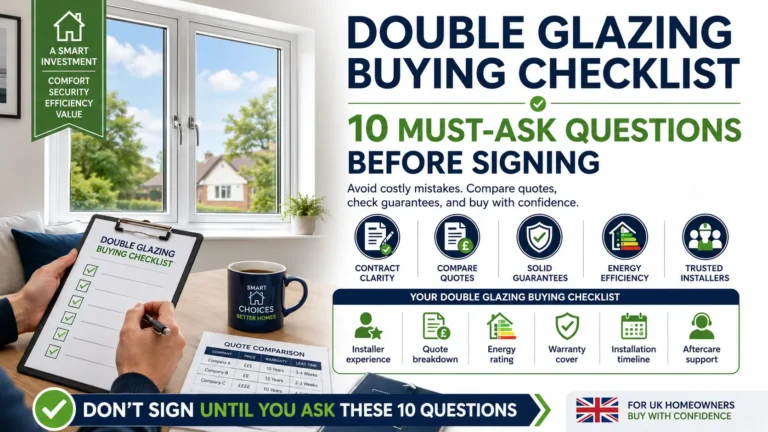
If 30 days pass without receiving your certificate, contact your installer in writing immediately. If they fail to respond, FENSA and Certass both have escalation procedures. See also: The Double Glazing Buying Checklist: 10 Questions You Must Ask Before Signing a Contract.
Completion Sign-Off Checklist
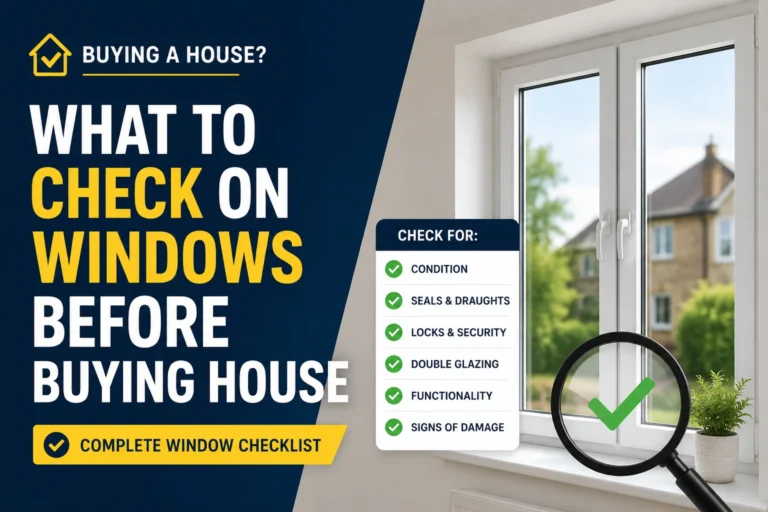
Before you sign anything on completion day, work through this checklist methodically:
Glazing Quality
- [ ] No visible chips, scratches, or marks on any glass panel
- [ ] No condensation or fogging between panes (a sealed unit fault)
- [ ] Equal sight lines across all windows in the same opening
Frame and Fitting
- [ ] Frames are level, plumb, and square – no visible twist or bow
- [ ] No visible gaps between frame and masonry
- [ ] Sealant lines are continuous, neat, and unpunctured
- [ ] All opening windows and doors operate smoothly without sticking
Hardware and Security
- [ ] All handles, hinges, and locks operate correctly
- [ ] Window restrictors fitted where required for safety, particularly on upper-floor windows and in homes with young children
- [ ] Multi-point locking mechanisms engage on all applicable doors
Documentation
- [ ] Written guarantee received (check duration – reputable companies offer 10 years minimum)
- [ ] FENSA or Certass registration confirmed or reference number provided
- [ ] Installer’s contact details for aftercare confirmed in writing
Do not sign the completion form if any item on this checklist is outstanding. Reputable installers expect customers to be thorough.
Energy Efficiency: What Your New Windows Should Achieve
The Energy Saving Trust notes that replacing single glazing with A-rated double glazing can save a typical semi-detached household a meaningful amount each year, depending on fuel type, property size, and the number of windows being replaced. The U-value of your windows (a measure of heat loss) should be 1.6 W/m²K or below to comply with current Building Regulations – better-specified windows will perform at 1.2 W/m²K or lower.
It’s also worth noting that some qualifying energy-saving glazing installations may benefit from 0% VAT under current HMRC rules on energy-saving materials – confirm eligibility with your installer at the quotation stage.
What to Do If Something Goes Wrong
Despite best efforts, problems do occur. Here’s the correct escalation path.
Step 1: Contact the Installer in Writing
Raise your complaint via email within 14 days of noticing the issue. Be specific: describe the defect, when you noticed it, and the remedy you require. The Consumer Rights Act 2015 entitles you to repair, replacement, or a price reduction for goods or services that are not of satisfactory quality or fit for purpose.
Step 2: Escalate to Their Complaints Procedure
Reputable installers will have a formal complaints procedure. Ask for it in writing if it was not provided at the point of sale.
Step 3: Contact the Certification Scheme
If your installer is FENSA or Certass-registered and is failing to resolve a legitimate complaint, both schemes have their own dispute resolution processes. FENSA may offer certain protections depending on the installer, policy terms, and circumstances – check directly with the scheme for details relevant to your situation.
Step 4: Alternative Dispute Resolution (ADR)
The Glass and Glazing Federation (GGF) provides a conciliation and arbitration service for disputes involving member companies. This is a cost-effective alternative to small claims court.
Step 5: Small Claims Court
For unresolved disputes involving financial loss under £10,000, the small claims track in the County Court remains an option. Ensure you have documented all communication throughout the previous steps.
Post-Installation Care
Your windows will perform best with minimal but consistent maintenance:
- Clean frames with warm soapy water and a soft cloth – avoid abrasive cleaners or solvents
- Apply a small amount of petroleum jelly or specialist lubricant to hinges and locking mechanisms twice a year
- Check sealant lines annually and report any cracking or shrinkage under your guarantee
- Condensation on the inside surface of the glass (not between the panes) indicates high indoor humidity – improve ventilation rather than assuming a glazing fault
Frequently Asked Questions
How long does double glazing installation take? Most installations are completed in one to three days. A single window can be fitted in a matter of hours; a full house replacement on a larger property may extend to three days.
What happens if my windows fog up between the panes? Fogging between the panes indicates a failed sealed unit – a manufacturing or installation defect. This is covered under your guarantee and should be reported immediately.
Do I need planning permission? In most cases, no. Replacing like-for-like windows in standard residential properties is permitted development. Properties in conservation areas or listed buildings are subject to additional restrictions – check with your local planning authority before ordering.
Can I stay at home during installation? Yes. Most homeowners remain at home throughout. Expect intermittent noise, some dust near the work areas, and the team moving through the property. Keeping children and pets away from the immediate work zones is strongly advised.
Final Word
Double glazing installation is one of the most cost-effective upgrades a UK homeowner can make. With energy savings confirmed by the Energy Saving Trust, potential VAT relief in place, and a clear regulatory framework protecting your investment, the case is strong. What matters is choosing a FENSA or Certass-registered installer, understanding your timeline, and knowing your rights before, during, and after the job.
Use the checklist above, hold your installer to the 30-day certification deadline, and don’t sign off until you’re genuinely satisfied. This upgrade should serve your home for 20 years or more – it’s worth taking those extra few minutes on completion day to get it right.
Sources: Energy Saving Trust | GOV.UK Building Regulations | FENSA | Certass | Glass and Glazing Federation | HMRC VAT Guidance | Insight Data | KBB Review | Which? | Consumer Rights Act 2015