Patio doors are one of the most beautiful features in a home – but they are also one of its most exploited weaknesses. Large, often rear-facing, and sometimes fitted with outdated locking mechanisms, they present an attractive opportunity to opportunist burglars. If you haven’t reviewed your patio door security recently, the crime data – and your insurer – strongly suggest you should.
| Question | Quick answer |
|---|---|
| Best patio door security upgrade? | Anti-lift device + multi-point lock + TS007 3-star cylinder |
| Best standard to look for? | PAS 24:2022 |
| Best police-backed mark? | Secured by Design |
| Smart lock for sliding patio doors? | Usually no – physical locks matter more |
The Burglary Picture in England and Wales
Understanding the risk starts with the numbers. According to the Office for National Statistics (ONS) Crime Survey for England and Wales: year ending December 2025 – published 23 April 2026 – there were an estimated 327,000 domestic burglary incidents in England and Wales, representing a 22% fall on the previous year. That continued decline is welcome, but it sits within a long-term picture that still puts hundreds of thousands of households at risk every year.
The headline trend, though, masks a stubborn reality about how burglars get in. The ONS Nature of Crime: Burglary tables confirm that in approximately 70% of domestic burglaries where the offender gained entry, they came through a door, and in around 30% of cases, through a window. Rear-access doors, including patio and French doors, are consistently identified as high-risk points precisely because they offer cover from the street and are frequently under-secured compared to front entrances.
Timing matters too. Analysis of ONS data by NimbleFins found that around a third of domestic burglaries occur during daylight hours, with nighttime (midnight to 6am) accounting for roughly 33% of incidents. This demolishes the assumption that simply being home protects you. Regionally, London and Yorkshire remain the worst-affected areas, with London’s Metropolitan Police recording a rate of 10.4 incidents per 1,000 households.
The practical takeaway from the ONS data is direct: if your patio door is the weakest point on the rear of your property, it is the most likely entry point in the event of a break-in. Securing it properly is not a luxury – it’s the logical response to what the statistics tell us.
What Secured by Design Requires for Patio Doors
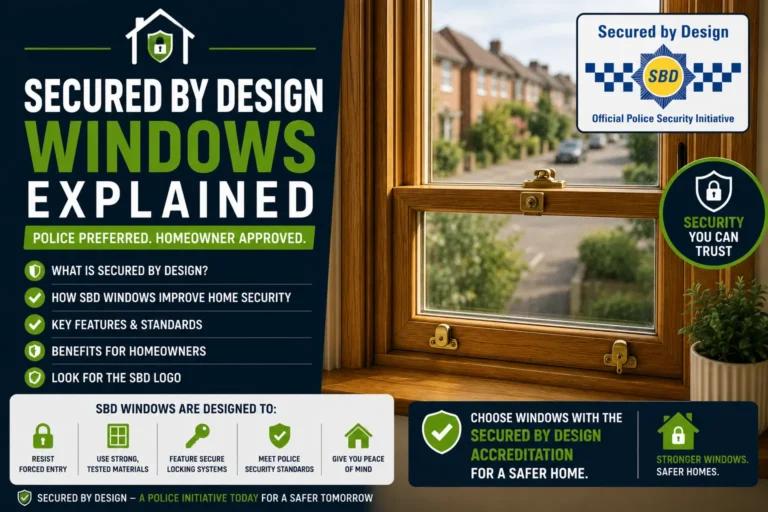
Secured by Design (SBD) is the UK police’s own crime prevention initiative. It awards a Police Preferred Specification to doors, windows, locks, and other hardware that have been independently tested and found to genuinely deter break-ins. SBD-certified products are used extensively in new-build housing, social housing, and commercial properties where security is a planning requirement.
For a patio door to achieve SBD certification, the complete doorset must meet the relevant PAS 24 enhanced-security standard and be approved as a tested product configuration. Depending on the design, this can include high-security cylinders, multi-point locking, hinge protection, anti-lift features, and laminated safety glass.
SBD also requires that the glazed panels themselves be tested as part of the doorset – not just the lock and frame. This is particularly relevant for patio doors, where large glazed panels can be the weakest element if not properly specified. You can verify whether a specific product holds current SBD certification using the product search on the Secured by Design website.
It’s worth noting that SBD is not a legal requirement in its own right, but many local planning policies and housing developers mandate it. Even where it isn’t required, it remains the clearest, most independently verified signal that a product has been rigorously tested. For more on what SBD means and how to identify certified products, see our guide Secured by Design Windows Explained.
PAS 24: The Technical Standard You Need to Know
PAS 24 (Publicly Available Specification 24) is the underlying British Standards Institution (BSI) test specification that underpins SBD certification and Building Regulations compliance. The current version, PAS 24:2022, came into force in October 2022 and replaces the previous 2016 edition.
PAS 24 is designed to simulate a realistic attack by an opportunist burglar using readily concealable tools – crowbars, chisels, knives, screwdrivers, and mole grips. It tests the door as a complete unit (frame, leaf, glazing, and hardware), and products either pass or fail – there is no partial compliance. Key tests include:
- Manual attack testing – sustained levering, wedging, and crowbar attacks on the frame and locking zone
- Mechanical loading – a force of up to 450kg applied perpendicular to the locking hardware to simulate extreme prying
- Glazing attacks – pressure and impact tests applied to glazed panels and beading
- Cylinder security testing – verifying the lock cylinder resists drilling, snapping, and picking
For new-build homes, PAS 24 compliance is a legal requirement under Approved Document Q of the Building Regulations, which took effect in October 2015. This applies to all accessible doors, including back doors, patio doors, and garage-to-house doors. For replacement doors in existing homes, it is not legally required – but any reputable installer will strongly recommend it, and some insurers now factor it into their risk assessment.
When buying a new patio door, look for evidence of PAS 24:2022 testing, ideally supported by a BSI Kitemark or a UKAS-accredited test certificate. This confirms the product has been tested by an independent, UKAS-accredited body and that the manufacturing process is subject to ongoing audit, not just a one-off pass. For more on how glass specification plays into this, see our guide to Toughened vs Laminated Glass: Which Is Safer?
Insurance Discounts: What Your Insurer Actually Requires
Upgrading your patio door security can have a tangible financial benefit beyond the obvious reduction in burglary risk. UK home insurers routinely adjust premiums based on the quality of door and window locks – and failing to meet their minimum standards can leave you partially or wholly uninsured in the event of a theft claim.
According to the Association of British Insurers (ABI), insurers assess domestic security as a key factor in both premium pricing and claims validity. For patio doors specifically, the standard insurance requirement (as published by The Crime Prevention Website, drawing on industry-standard policy wording) is that sliding patio doors must be fitted with:
- An anti-lift device to prevent the door from being lifted off its running tracks, and
- Either two key-operated patio door locks at the top and bottom of the frame, or a key-operated multi-point locking system with at least two locking points
The distinction matters when it comes to discounts. According to Confused.com’s guide to patio door locks, a central rail key-operated lock may earn you a contents premium discount, while a key-operated multi-point locking system – the higher standard – offers both better protection and stronger grounds for a reduced premium. Basic hook-and-eye or lever locks without key operation are generally insufficient.
Smart locks can also support your insurance position, provided they are used in conjunction with an approved mechanical lock. As Compare the Market notes, as long as your smart lock is used alongside a mortice deadlock, it should not negatively affect your home insurance – and demonstrably higher security can strengthen your negotiating position when renewing.
The practical advice: call your insurer before buying and confirm in writing which lock standards they accept. Common reference standards include BS3621 (for mortice deadlocks), TS 007 (for cylinders), and SS312 Diamond for multi-point locking cylinders. Products conforming to these will generally both satisfy insurer requirements and qualify for discounted premiums.
Patio Door Security: Specific Product Recommendations
Whether you’re upgrading an existing door or specifying a new one, these are the products consistently rated for both security performance and UK market availability.
Ultion 3-Star PLUS Cylinder (from ~£63) – The gold standard for euro cylinder replacement in uPVC and composite patio doors. Independently tested to TS 007 3-star specification, it carries the BSI Kitemark, Master Locksmiths Association approval, and a £5,000 burglary guarantee from manufacturer Brisant Secure. Its molybdenum alloy core is 25% denser than iron and resists the most common UK break-in technique – cylinder snapping.
Fuhr Multi-Point Locking System – A respected multi-point locking option commonly used in UK door systems. Available through glazing and door suppliers, it provides five or more simultaneous locking points and is compatible with SBD-certified doorsets. Expect to pay £80–£150 for the mechanism alone, with fitting typically adding £80–£120 via a FENSA-registered installer (see FENSA for certified local tradespeople).
ERA Guardian High Security Anti-Lift Patio Lock (from ~£30) – A key-operated, surface-mounted lock designed specifically for sliding patio doors. Provides both the anti-lift function and the key-operated locking point that most insurers require. Widely available from B&Q, Screwfix, and locksmith suppliers.
Composite Patio Door with PAS 24:2022 Certification – For full door replacement, look for composite doorsets from manufacturers whose products are listed on the SBD website. Prices for the supply and installation of a PAS 24-certified composite bi-fold or sliding patio door typically range from £2,500 to £5,500, depending on size, specification, and number of panels.
For front door security comparisons and further context on door standards, see our guide to Choosing the Most Secure and Energy-Efficient Front Door in the UK.
Smart Lock Comparison: Yale, Nuki, and Ultion Nuki
Smart locks add a layer of convenience and remote monitoring to your physical security. For UK homeowners with patio or rear-access doors, the three most relevant options in 2025 are compared below. Note that smart locks supplement rather than replace physical security – they work alongside your multi-point lock and cylinder.
| Feature | Yale Linus L2 | Nuki Smart Lock Pro (5th Gen) | Ultion Nuki 2025 |
|---|---|---|---|
| UK Price (approx.) | ~£265 | ~£229 | ~£299 |
| Installation | Retrofit over existing cylinder | Retrofit over existing cylinder | Replaces cylinder & handle |
| Built-in Wi-Fi | ✅ Yes | ✅ Yes | ✅ Yes |
| Physical Key Backup | ✅ Yes | ✅ Yes | ✅ Yes |
| Matter Support | ✅ Yes | ✅ Yes | ✅ Yes |
| Security Certification | BSI-backed brand | AV-Test Level 3 (highest) | BSI Kitemark + TS 007 3-star cylinder |
| Cylinder Included | ❌ No (works with existing) | ❌ No (works with existing) | ✅ Yes (Ultion 3-star PLUS) |
| Burglary Guarantee | ❌ No | ❌ No | ✅ £5,000 (5 years) |
| Smart Home Ecosystems | Alexa, Google, Apple, Matter | Alexa, Google, Apple, Matter | Alexa, Google, Apple, Matter |
| Battery | Rechargeable (USB-C, ~6 months) | Rechargeable (magnetic USB-C) | Rechargeable (USB-C, ~9 months) |
| Auto-Unlock (Geofencing) | ✅ Yes | ✅ Yes | ✅ Yes |
| Best For | Renters; brand familiarity | App power users; smart home depth | Maximum physical security + smart features |
The Ultion Nuki 2025 is the standout choice for homeowners who want both best-in-class physical security and smart functionality. It is priced at £299 and available in white/steel, black/steel, or chrome finishes, with optional extras including a key fob for £49, a fingerprint keypad for £145, and an auto-lock sensor for £55. The integrated Ultion 3-star PLUS cylinder – which has never triggered a payout on its £5,000 guarantee – means you’re not relying on your existing cylinder’s quality.
The Yale Linus L2 suits renters and homeowners who want a smart upgrade without replacing hardware, and carries Yale’s trusted UK brand reputation. The Nuki Smart Lock Pro is the strongest choice for smart home integration depth and is particularly well-regarded among Apple HomeKit users.
Important note: Smart locks are designed for standard front and back door cylinders. They are not currently a direct solution for sliding patio door tracks, which have different hardware. For a patio door, smart locks are best applied at an adjacent access point (such as a connecting internal door), while physical lock upgrades – multi-point systems, anti-lift devices, and upgraded cylinders – remain the primary security measure.
A Note on Glass Specification
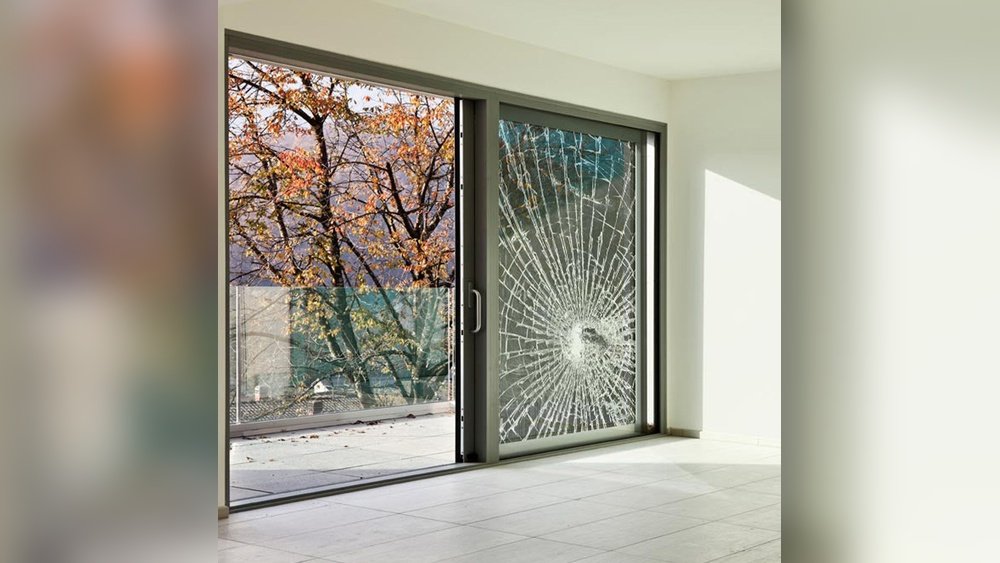
Any discussion of patio door security is incomplete without addressing glazing. A reinforced lock is only as strong as the weakest panel it protects, and standard toughened glass – while safe – can be broken relatively quickly with the right tools. For patio doors in higher-risk areas, laminated glass is strongly recommended: it holds together under impact, buying time and creating noise that deters opportunist attackers. SBD-certified patio doors will specify laminated glass as part of their tested configuration. For a full comparison, see our guide to Toughened vs Laminated Glass: Which Is Safer?
Summary: What to Do Now
The ONS data is clear that doors are the primary entry point in domestic burglaries, and patio doors – rear-facing, often under-secured – are a logical target. The good news is that the standards framework in the UK is robust: PAS 24:2022 and Secured by Design certification give you independently tested benchmarks to buy to, and the insurance industry directly rewards investment in compliant hardware.
Immediate steps worth taking:
- Check your existing patio door locks against your insurer’s requirements – call and confirm in writing.
- If your cylinder is more than five years old or lacks TS 007 certification, replace it with an Ultion or equivalent 3-star rated cylinder.
- If your patio door has a basic hook-and-eye lock or hook bolts only, upgrade to a key-operated multi-point system.
- Verify the anti-lift device is fitted and functional – this is a common insurer requirement for sliding patio doors.
- For new door installations, specify PAS 24:2022 compliance as a minimum and ask your installer whether SBD-certified products are available.
For FENSA-certified installers who can carry out compliant door upgrades, visit fensa.org.uk. For independent certification and product standards guidance, the Glass and Glazing Federation (GGF) is a reliable trade body resource.
Frequently Asked Questions
How do I know if my patio door lock meets my home insurance requirements? Check your policy documents for the specific lock standards listed under “door security” or “condition of cover.” Most UK insurers require sliding patio doors to have an anti-lift device and either two key-operated locks positioned at the top and bottom of the frame, or a key-operated multi-point locking system. If the wording is unclear, call your insurer directly and ask them to confirm in writing which lock standards they accept – common references are BS3621, TS 007, and SS312 Diamond. If your current locks don’t meet the standard, any theft claim through that door could be reduced or refused.
Does a PAS 24 patio door need planning permission? In most cases, no. Replacing a patio door with a like-for-like unit – same position, similar appearance – is considered permitted development and does not require planning permission. However, if your property is a listed building, sits within a conservation area, or is subject to an Article 4 Direction removing permitted development rights, you will need to seek consent before replacing doors or windows. Check with your local planning authority if you are unsure. Separately, replacement doors in existing homes are not legally required to meet PAS 24 – but any new-build or conversion requiring Building Regulations approval under Approved Document Q must comply.
What is the best lock for a uPVC sliding patio door? A key-operated multi-point locking system combined with an upgraded euro cylinder is the strongest configuration for a uPVC sliding patio door. For the cylinder, look for a TS 007 three-star rated option such as the Ultion 3-Star PLUS (from around £63), which resists the most common UK break-in technique – cylinder snapping. For the multi-point mechanism itself, Fuhr is a respected option commonly used by glazing professionals. You should also fit an anti-lift device to the door track, which prevents the door being physically lifted off its runners – a common and fast method of bypassing the lock entirely.
Can I fit a smart lock to a patio door? Not directly in most cases. Smart locks such as the Yale Linus L2, Nuki Smart Lock Pro, and Ultion Nuki are designed to retrofit over a standard euro cylinder on a hinged door – they are not currently compatible with the track-and-hook locking hardware found in sliding patio doors. For sliding doors, physical security upgrades (multi-point locks, anti-lift devices, upgraded cylinders) remain the primary measure. Smart lock technology is best applied to an adjacent hinged door – such as a connecting internal or side-access door – where it can add remote monitoring, auto-lock, and keyless entry without compromising physical security.
Do I need Secured by Design certification for a replacement patio door? You don’t legally need it, but it is strongly worth seeking. SBD certification is a legal requirement in some new-build developments where it forms part of a planning condition, but for replacement doors in existing homes, it is voluntary. That said, an SBD-certified patio door provides the clearest independent evidence that the complete doorset – frame, leaf, glazing, and hardware – has been tested to resist a realistic attack. It also gives you a strong position with your insurer and may support a reduced premium. You can search for currently certified products at securedbydesign.com.
Sources: ONS Crime Survey for England and Wales: year ending December 2025 | Secured by Design | GOV.UK Building Regulations – Approved Document Q | Association of British Insurers | FENSA | Glass and Glazing Federation