Double Glazed Door Costs 2026: The Ultimate UK Pricing Guide
When planning a home improvement project, the first and most pressing question for any homeowner is invariably: “How much will it cost?” Replacing an old, draughty door with a secure, energy-efficient double-glazed alternative is a significant investment, but the prices can vary wildly. A simple uPVC back door might cost a fraction of what a sprawling set of aluminium bi-fold doors commands.
This comprehensive pillar guide breaks down the average double-glazed door costs in the UK for 2026. We explore the pricing for front, back, patio, French, and bi-fold doors, compare the costs of different materials like uPVC, composite, and aluminium, and highlight the hidden factors that can influence your final quote. For a broader view of what your project might cost overall, see our full guide to double glazing costs in the UK.
Average Double Glazed Door Costs at a Glance
Before diving into the specifics of each door type and material, it is helpful to understand the general price landscape. The table below outlines the average estimated costs for the most common double-glazed doors in the UK, including standard installation and VAT, based on industry pricing surveys and GreenMatch cost comparison data published in 2025–2026.
| Door Type | Material | Estimated Cost Range (Fully Installed) |
|---|---|---|
| Front Door | uPVC | £500 – £900 |
| Front Door | Composite | £900 – £1,500+ |
| Front Door | Timber | £1,200 – £2,500+ |
| Back Door | uPVC (Half-Glazed) | £450 – £800 |
| French Doors | uPVC | £1,200 – £1,800 |
| French Doors | Aluminium | £2,000 – £3,500 |
| Patio Doors (Sliding) | uPVC | £1,000 – £2,000 |
| Patio Doors (Sliding) | Aluminium | £2,000 – £4,000 |
| Bi-Fold Doors (3-Panel) | Aluminium | £3,000 – £5,000+ |
| Bi-Fold Doors (4+ Panel) | Aluminium | £5,000 – £10,000+ |
Source: GreenMatch UK cost comparison data (2026); national averages for standard sizes. Your actual quote will depend on your specific requirements, location, and the installer you choose.
Regional Price Variations: What You’ll Pay Across the UK
One of the most overlooked factors in door pricing is geography. Labour rates, business overheads, and local market competition mean that the same door and fitting package can cost meaningfully more in central London than in the north of England or rural Wales. The table below reflects typical regional adjustments based on industry installer data.
| Region | Price Adjustment vs. National Average | Example: Composite Front Door |
|---|---|---|
| Greater London | +20% to +35% | £1,080 – £2,025+ |
| South East England | +10% to +20% | £990 – £1,800+ |
| South West England | +5% to +10% | £945 – £1,650+ |
| East of England | +5% to +10% | £945 – £1,650+ |
| Midlands | Approx. average | £900 – £1,500+ |
| North West England | -5% to -10% | £810 – £1,350+ |
| Yorkshire & Humber | -5% to -10% | £810 – £1,350+ |
| North East England | -10% to -15% | £765 – £1,275+ |
| Scotland | -5% to +5% (varies) | £855 – £1,575+ |
| Wales | -5% to -10% | £810 – £1,350+ |
These figures represent indicative regional benchmarks. Always obtain local quotes for accurate pricing.
Front Door Costs: uPVC vs. Composite vs. Timber
Your front door is the focal point of your home’s exterior and its primary line of defence against intruders and the elements. For a deeper look at security and energy performance options, read our dedicated guide to choosing the most secure and energy-efficient front door in the UK. The material you select is the single biggest factor influencing the cost.
uPVC Front Doors
Unplasticised Polyvinyl Chloride (uPVC) remains the most affordable and popular option in the UK. A standard uPVC front door with double-glazed panels typically costs between £500 and £900, fully installed. They offer excellent thermal efficiency, require minimal maintenance, and are available in a wide variety of colours and finishes, including realistic woodgrain effects. While they may lack the heavy, solid feel of a timber door, modern uPVC doors feature multi-point locking systems that provide robust security in line with guidelines from Secured by Design, the official UK police crime prevention initiative. Doors meeting PAS 24 enhanced security standards are strongly recommended; the Association of British Insurers (ABI) notes that quality door and window security measures may support better insurer confidence, though premium discounts are not guaranteed and will vary by provider and policy.
Composite Front Doors
Composite doors have surged in popularity due to their superior strength, security, and aesthetic appeal. Constructed from a combination of materials — often a solid timber or high-density foam core surrounded by a glass-reinforced plastic (GRP) skin — they mimic the look of traditional wood without the associated maintenance. Composite doors have become one of the most popular front door choices in the UK, particularly at the mid-to-premium end of the market, driven by their combination of low maintenance, enhanced security, and kerb appeal. Because of their complex construction and enhanced durability, composite doors command a higher price, generally ranging from £900 to £1,500 or more for premium designs. Their superior insulation properties also align with the requirements set out in Building Regulations Part L, which governs the thermal performance of new building elements. The Energy Saving Trust further recommends selecting doors with a U-value of 1.8 W/m²K or better for optimal energy performance.
Timber Front Doors
For period properties or homeowners seeking a truly authentic, bespoke aesthetic, solid timber front doors remain the traditional choice. While undeniably beautiful, they require regular maintenance (sanding, painting, or varnishing) to prevent warping or rotting. High-quality, sustainably sourced timber doors with double glazed panels are a premium product, often starting around £1,200 and reaching well over £2,500 depending on the wood species and craftsmanship.
Back Door Costs: Simple and Secure
Back doors are typically more utilitarian than front doors, focusing primarily on security and allowing light into kitchens or utility rooms. The most common and cost-effective choice is a uPVC back door.
A standard uPVC back door, often featuring a solid lower half and a double-glazed upper panel (half-glazed), usually costs between £450 and £800 installed. Fully glazed uPVC back doors, which maximise natural light, sit at the higher end of this spectrum due to the increased volume of safety glass required. Safety glass in doors should be toughened or laminated and comply with relevant UK safety glazing requirements — a standard enforced under Building Regulations to prevent dangerous shattering.
Patio and French Door Costs
When opening up a living space to a garden or patio, homeowners typically choose between sliding patio doors and classic French doors. A well-executed garden-facing upgrade can improve buyer appeal and add to the sense of space and light, though returns vary by property, location, and installation quality. For a comprehensive look at keeping these openings safe, see our guide on patio door security.
French Doors
French doors consist of two side-hinged doors that open outwards or inwards, offering a traditional, elegant aesthetic. They are ideal for smaller openings where sliding doors might be impractical. A standard set of uPVC double-glazed French doors generally costs between £1,200 and £1,800 fully installed. Upgrading to aluminium frames — which offer slimmer sightlines and a more contemporary look — will push the price towards £2,000 to £3,500.
Sliding Patio Doors
Sliding patio doors feature large panes of glass that slide horizontally along a track. They are excellent for saving space, as they do not require clearance to swing open, and they offer expansive, uninterrupted views of the garden. A standard two-pane uPVC sliding patio door typically ranges from £1,000 to £2,000 installed. The cost scales upwards as you add more sliding panels or opt for wider expanses of glass. Premium aluminium sliding systems can command £2,000 to £4,000 or more for larger spans.
Bi-Fold Door Costs: The Premium Choice
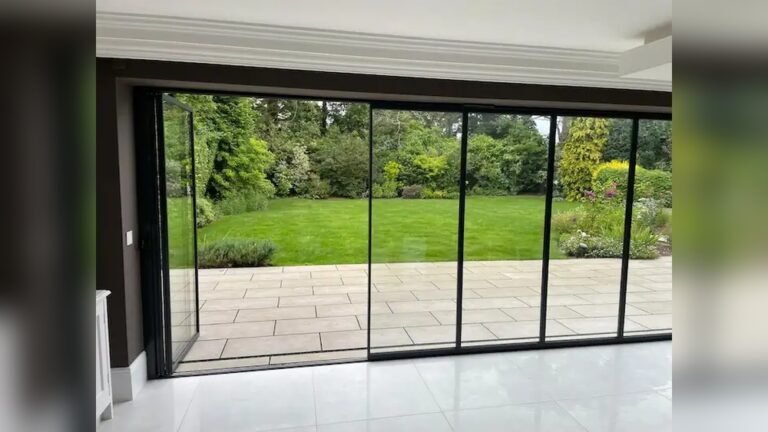
Bi-fold doors have become the ultimate aspirational home improvement feature. They consist of multiple glass panels that fold back against themselves in a concertina style, effectively removing an entire wall and seamlessly blending indoor and outdoor living spaces.
Due to the complex engineering, heavy-duty tracking systems, and the sheer volume of glass involved, bi-fold doors are the most expensive option. While uPVC bi-folds are available, aluminium is the overwhelmingly preferred material due to its inherent strength, which allows for slimmer frames and larger glass panels. A standard three-panel aluminium bi-fold door system typically starts around £3,000 and can easily exceed £5,000 for larger, bespoke configurations. For expansive four-panel or five-panel systems spanning an entire rear wall, budgets of £7,000 to £10,000+ are not uncommon.
Lead times are also a practical consideration here: bespoke bi-fold and large patio door systems typically carry a manufacturing lead time of six to twelve weeks, so factor this into your project timeline when booking installers and planning any associated building work.
5 Key Factors That Affect Your Final Quote
While the averages provide a useful baseline, several specific factors will influence the final quote you receive from an installer.
| Factor | Impact on Cost | Detail |
|---|---|---|
| Size & Configuration | High | Larger or non-standard sizes require more materials and bespoke manufacturing. |
| Material Choice | High | uPVC < Composite < Aluminium < Premium Timber. |
| Glass Specification | Medium | Toughened, laminated, acoustic, or self-cleaning glass all add a premium. |
| Hardware & Finishes | Medium | Bespoke colours (e.g., Anthracite Grey), premium handles, and smart locks increase cost. |
| Installation Complexity | Variable | Widening an opening, fitting a new lintel, or extensive making good adds significant labour costs. |
Hidden Costs to Watch Out For — and Why a 10–15% Contingency Is Essential
When comparing quotes, it is vital to ensure you are comparing like for like. A quote that appears cheaper on the surface may simply exclude costs that will appear as extras later. Industry best practice — widely recommended by consumer advocates, including Which? and the MoneySavingExpert community — is to set aside a contingency budget of 10 to 15% above your headline quote to absorb unforeseen costs without stalling your project.
Always check if the quote explicitly includes the following:
- VAT at 20% should always be clearly stated in the quote. It is also worth noting that, under GOV.UK guidance, some qualifying energy-saving installations may benefit from a 0% VAT rate until 31 March 2027 — confirm eligibility with your installer, as not all double-glazed door products will qualify.
- Removal and disposal of your old door and frame. These are heavy, bulky items requiring licensed disposal and should be included as standard.
- Making good surrounding plasterwork, brickwork, or render disturbed during the old frame’s removal.
- Structural work, such as a new or reinforced lintel, if you are altering or widening the existing opening. This can add several hundred pounds and should be assessed before work begins.
- FENSA or Certass certification: all replacement door installations in England and Wales must comply with Building Regulations. Where a replacement door includes more than 50% glazing, it is generally treated as controlled glazing work and should be registered through a competent person scheme such as FENSA or Certass, or approved through Building Control, and their certificate is essential documentation when you sell your home. Reputable installers will handle this registration at no extra charge, but always confirm upfront.
- Decoration costs if significant internal making good is required, which may necessitate hiring a separate decorator.
The Glass and Glazing Federation (GGF) also recommends always using a registered member installer to ensure workmanship guarantees and proper certification are in place.
Seasonal Pricing: When You Buy Matters
Timing your purchase can have a meaningful impact on your final cost. Installer availability and demand mean that prices can be higher during peak summer months (June to August), when fitting teams are often fully booked weeks in advance. Conversely, the quieter late autumn and winter period — particularly October through January — tends to be more competitive, with many installers offering promotional pricing or greater flexibility on lead times to keep their crews occupied. If your project is not urgent, scheduling during the off-peak period can represent a genuine saving, particularly on larger, higher-value installations like bi-folds or full sets of French doors.
How to Save Money on Your Double Glazed Doors
While a new door is a significant outlay, there are strategic ways to ensure you get the best value for your money without compromising on quality or security.
The most effective strategy is to gather and compare at least three comprehensive quotes from different installers. This allows you to gauge the local market rate and provides leverage for negotiation. Consider obtaining quotes from both large national companies and smaller, reputable local independent installers, as their pricing structures and overheads often differ considerably.
Sticking to standard sizes and popular colours (such as white uPVC) is generally more cost-effective than ordering bespoke dimensions or custom foiled finishes. Similarly, choosing a door from a manufacturer’s standard colour palette rather than a special-order RAL colour can save £100–£200 on some composite or aluminium products. Online configurator tools are increasingly useful here, allowing homeowners to visualise styles, colours, and glass options before requesting a quote and reducing the likelihood of costly specification changes mid-order.
Finally, always ask your installer whether the product they are fitting carries a manufacturer’s guarantee (typically 10 years for frames and hardware) and confirm that the guarantee is transferable to future owners, which adds tangible value if you sell your home.
Looking Ahead: Smart Technology and the Future of Double Glazed Doors
The door market is not standing still. Alongside the established shift towards aluminium bi-folds and composite front doors, manufacturers and technology providers are developing the next generation of entry systems. Smart locks and biometric access — including fingerprint and facial recognition — are likely to become more common in premium residential doors over the next few years, building on the smart lock integration that is already a growing specification request from homeowners. As the Glass and Glazing Federation has noted, this trend reflects a broader shift towards combining convenience with enhanced security at the front door. If you are replacing your front door in 2026 and expect to remain in your property for the medium to long term, it is worth selecting a door and frame system that is compatible with smart lock upgrades, even if you do not install them at the outset.
Key Takeaways
Double-glazed door costs in the UK range from approximately £450 for a basic uPVC back door to over £10,000 for a large aluminium bi-fold system. The material, size, glass specification, and installation complexity are the primary cost drivers, with regional location adding a further meaningful variable.
- Composite doors are among the most popular front door choices in the UK, particularly at the mid-to-premium end — driven by strength, low maintenance, and aesthetic appeal.
- Always obtain at least three fully inclusive quotes covering VAT, disposal, making good, and FENSA/Certass certification.
- Set aside a 10–15% contingency above your headline quote.
- Budget for 6–12 week lead times on bespoke bi-fold and patio door systems.
- Consider timing your project for autumn or winter when installer demand is lower and pricing tends to be more competitive.
- Smart lock and biometric-compatible door systems are an increasingly sensible future-proofing choice — even if you don’t need them today.
Sources: GreenMatch UK (2026); Energy Saving Trust (energysavingtrust.org.uk); Building Regulations Part L (gov.uk/building-regulations-approval); GOV.UK VAT on energy-saving materials (gov.uk/guidance/vat-on-energy-saving-materials); FENSA (fensa.org.uk); Certass (certass.co.uk); Glass and Glazing Federation (ggf.org.uk); Which? double glazing buying guide (which.co.uk/reviews/double-glazing/article/how-to-buy-double-glazing/double-glazing-sales-and-quotes-aN4Ac0R520fy); MoneySavingExpert community discussion (forums.moneysavingexpert.com); Secured by Design (securedbydesign.com); Association of British Insurers — cutting home insurance costs (abi.org.uk/products-and-issues/choosing-the-right-insurance/home-insurance/cutting-the-cost-of-home-insurance/).