Double Glazing vs Triple Glazing: The Complete UK Data-Driven Guide (2026)
Last updated: April 2026 | Reading time: 9 minutes
Are you weighing up double glazing vs triple glazing for your UK home — and wondering whether paying a 20–30% premium for the extra pane is actually worth it?
You’re not alone. With energy bills still stubbornly high and the Future Homes Standard deadline approaching, this is one of the most consequential decisions a UK homeowner can make right now. The difference between the two isn’t just a pane of glass — it’s a gap in thermal performance that could mean hundreds of pounds per year, and a compliance question that may soon be answered for you by regulation.
This guide cuts through the marketing noise with real U-values, EST-backed energy savings data, and an honest ROI calculation so you can make the right call for your home, budget, and climate zone.
⚡ Quick Takeaways
- Double glazing — best value for most UK homes
- Triple glazing — ~50% less heat loss than standard double glazing
- Typical premium — +20–30% (£150–£300 per window)
- Extra annual savings — approximately £40–£75/year over A-rated double glazing
- Best suited to — cold climates, new builds, and noisy areas
- ROI on the upgrade alone — ~30+ years (energy savings only)
1. The Basics: How Each System Works
Both double and triple glazing use the same fundamental principle: trapped gas between panes of glass acts as a thermal barrier, slowing the transfer of heat from warm inside to cold outside. The key variables are the number of panes, the type of gas used, and the low-emissivity (low-e) coatings applied to the glass surfaces.
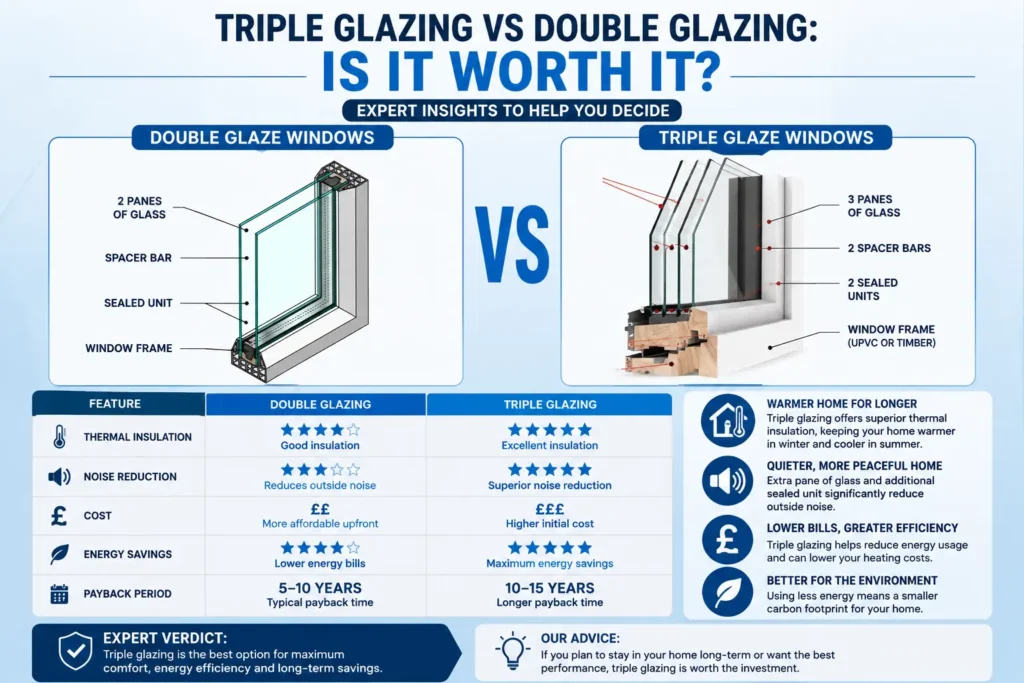
Double glazing consists of two panes of glass separated by a sealed cavity — typically 12–16mm — commonly filled with argon gas or krypton. A low-e coating on the inner pane reflects heat back into the room. This has been the UK standard since the 1980s and remains widely used in FENSA-registered installations that meet Building Regulations Part L.
Triple glazing adds a third pane and a second cavity, effectively doubling the insulating layer. The two gas-filled spaces — again, typically argon or the denser krypton — significantly reduce both heat loss and sound transmission. The additional pane also provides a third surface for low-e coating application, compounding the thermal benefit.
A useful way to visualise it: double glazing is like wearing a fleece jacket; triple glazing is like adding a windproof shell over the top. The marginal gain depends entirely on how cold the conditions are.
2. U-Value Comparison: The Numbers That Matter
The U-value (measured in W/m²K) is the single most important number when comparing glazing performance. It measures the rate of heat transfer through a material — the lower the number, the better the insulation.
| Glazing Type | Typical U-Value (W/m²K) | Performance Band |
|---|---|---|
| Single glazing | 4.8–5.8 | Very poor |
| Standard double glazing | 1.4–1.6 | Acceptable |
| A-rated double glazing (argon-filled, low-e) | 1.2–1.4 | Good |
| Triple glazing | 0.6–0.8 | Excellent |
| Vacuum glazing (next-gen) | ~0.5 | Outstanding |
According to data from the Glass and Glazing Federation (GGF), the average U-value of installed double glazing in the UK dropped from 1.6 W/m²K to 1.3 W/m²K over the past five years, reflecting improvements in low-e coatings and gas-fill technology. That’s meaningful progress — but it still falls well short of triple glazing’s 0.6–0.8 W/m²K range.
To put it in plain terms: triple glazing loses roughly half the heat per square metre that double glazing does under the same conditions. In a home with 15m² of glazing (a fairly typical semi-detached), that difference adds up to significant heating demand across a UK winter.
The Energy Saving Trust uses U-values as a primary metric in their home energy assessments, and recommends targeting the lowest achievable U-value when undertaking whole-home retrofits.
In practice, this often means fewer cold spots near windows and a more even room temperature — something homeowners tend to notice far more than the raw energy saving figure.
3. Cost Comparison: What You’ll Actually Pay
Triple glazing’s thermal superiority comes at a price. Based on current UK market data, you can expect the following installed costs for a typical 3-bedroom semi-detached (approximately 8–10 windows):
| Option | Estimated Installed Cost | vs. Double Glazing |
|---|---|---|
| Double glazing (A-rated) | £4,500–£7,000 | — |
| Triple glazing | £5,400–£9,100 | +20–30% |
The premium varies by frame material — uPVC frames remain cheapest, while aluminium and timber add cost to both options. According to GreenMatch, triple glazing typically adds £150–£300 per window over an equivalent double-glazed unit, depending on size and specification.
The good news on cost: HMRC’s guidance on VAT for energy-saving materials is worth checking before you commit — some qualifying energy-saving glazing installations may benefit from 0% VAT under current rules, but eligibility depends on the exact products and installation details. Confirm with your installer or a tax adviser, as this can represent a meaningful saving on a mid-range project.
Hidden costs to factor in: Triple-glazed units are heavier (a standard 1.2m × 1.2m triple-glazed unit weighs approximately 45kg vs 30kg for double), meaning frame reinforcement may be required in older properties. This can add £200–£500 to the project cost and is worth confirming with your FENSA-registered installer before committing.
4. Energy Savings Calculation: EST Data
The Energy Saving Trust estimates that upgrading from single glazing to A-rated double glazing saves approximately £135 per year on energy bills for a typical semi-detached house. But what about the step from double to triple?
The incremental saving is more modest. Based on EST methodology and building physics modelling from the BRE Group, moving from A-rated double glazing (U-value 1.2 W/m²K) to triple glazing (U-value 0.7 W/m²K) can reduce heat loss through glazing by a further 35–45%.
For a typical UK home, that translates to an additional saving of approximately £40–£75 per year on top of double glazing’s baseline saving — a figure heavily influenced by:
- The size and orientation of your glazed area
- Your heating system efficiency
- Your thermostat habits and occupancy patterns
- Your local climate (more on this below)
Homes in Scotland, Northern England, and Wales — where heating degree days are significantly higher than the national average — will see savings at the upper end of this range. A well-insulated home in the South East with modern controls may see closer to £40/year.
It’s also worth noting that savings are greatest when replacing older, failing double-glazed units. Seals degrade over 15–20 years, and a double-glazed window with a blown seal can perform no better than single glazing. If your existing units are over 15 years old, the true baseline saving could be substantially higher than these figures suggest.
5. Noise Reduction: When the Extra Pane Earns Its Keep
Acoustic performance is one area where triple glazing’s case is most compelling — but the picture is more nuanced than simply “more panes = less noise.”
Sound reduction in glazing is measured in Rw (weighted sound reduction index), expressed in decibels:
| Glazing Type | Typical Rw (dB) | Practical Effect |
|---|---|---|
| Standard double glazing | 28–32 dB | Reduces traffic noise noticeably |
| Acoustic double glazing | 34–38 dB | Significant noise reduction |
| Standard triple glazing | 32–36 dB | Marginally better than standard DG |
| Acoustic triple glazing (varied glass thickness) | 38–42 dB | Substantial noise reduction |
The key insight from BRE Group acoustic research is that using two panes of different thickness (asymmetric glazing) is often more effective for noise reduction than simply adding a third pane of the same thickness. A standard symmetrical triple-glazed unit may only marginally outperform a well-specified acoustic double-glazed unit.
The WHO Environmental Noise Guidelines for the European Region recommend that road traffic noise be reduced below 53 dB Lden to prevent health impacts — a threshold regularly exceeded on urban A-roads and near major transport routes. If you live within 100m of a busy road, railway, or under a flight path, acoustic glazing should be a primary specification criterion alongside thermal performance.
For most rural and suburban homes with modest noise exposure, the acoustic difference between standard double and triple glazing is unlikely to be perceptible in everyday life.
6. When Triple Glazing Makes Sense (And When It Doesn’t)
Triple glazing is the right choice when:
- You’re building new or doing a full retrofit — the cost differential is proportionally smaller when integrated into a larger project, and the performance gain contributes directly to EPC rating.
- You’re in a cold or exposed location — Scotland, Northern England, elevated rural areas, and coastal properties subject to prevailing winds will see the most meaningful thermal return.
- You’re targeting a Passivhaus or near-zero energy standard — triple glazing is essentially mandatory for Passivhaus certification, where the overall heat loss budget is so tight that double glazing simply can’t meet the envelope performance requirements.
- You’re on a noisy road, rail, or flight path — provided you specify asymmetric acoustic glass, triple glazing delivers meaningfully better noise attenuation.
- You’re planning to stay long-term — the extended payback period (see Section 9) only makes financial sense if you’re in the property for 15+ years.
Double glazing remains the smarter choice when:
- You’re in a mild climate zone (much of South East England) — the incremental thermal benefit of triple glazing diminishes significantly when outdoor temperatures rarely drop below -5°C.
- You have a listed building or conservation area property — Historic England’s guidance cautions against over-specified glazing in traditional buildings where thermal mass, draughtproofing, and secondary glazing may be more appropriate and sympathetic interventions.
- Budget is the primary constraint — well-specified A-rated double glazing delivers approximately 75–80% of triple glazing’s thermal performance at 70–80% of the cost. For most UK homeowners, this represents better value per pound spent.
- You’re replacing relatively recent double glazing — if your existing units are less than 10 years old, the energy saving from upgrading to triple glazing will not justify the cost within any reasonable timeframe.
7. The Future Homes Standard: A Regulatory Imperative
This is where the double vs triple debate becomes less of a lifestyle choice and more of a planning decision. The UK government’s Future Homes Standard is expected to shape new-build glazing requirements, with tighter Part L performance targets pushing developers toward higher-performing windows. The direction of travel is clear: new homes will need to produce 75–80% less carbon than those built to 2013 standards.
The headline glazing implication: new homes are expected to be required to achieve a maximum U-value of 1.2 W/m²K across the building envelope, including windows. That’s the top of the current A-rated double glazing performance range — meaning standard double glazing becomes the effective minimum, and any glazing that underperforms (older stock, poor installs, poor frame specification) risks falling short.
For anyone building a new home or major extension under current or upcoming Part L standards, this effectively makes high-performance A-rated double glazing the floor and triple glazing the logical step up for future-proofing. Developers targeting EPC rating A — increasingly expected by mortgage lenders and buyers — will find triple glazing is one of the most reliable routes to the additional thermal performance required.
You can review the full regulatory requirements via GOV.UK Building Regulations.
8. Vacuum Glazing: The Technology Coming Next
Before you finalise your specification, it’s worth knowing what’s coming down the pipeline — particularly if your project timeline extends into 2026–2027.
Vacuum glazing replaces the gas-filled cavity with a near-total vacuum, supported by microscopic pillars between the panes. This eliminates convective heat transfer almost entirely, achieving U-values as low as 0.5 W/m²K — better than standard triple glazing, in a unit no thicker than conventional double glazing (approximately 8mm overall).
The implications are significant:
- Retrofit compatibility — vacuum glazing can fit in existing double-glazed frames, making it suitable for conservation areas and period properties where triple glazing’s bulk is problematic.
- Weight — significantly lighter than triple glazing, eliminating the structural frame concerns that add cost.
- Performance — at 0.5 W/m²K, vacuum glazing matches or exceeds triple glazing’s thermal performance while exceeding Future Homes Standard requirements with headroom to spare.
The catch, for now, is cost: vacuum glazing currently commands a significant premium over triple glazing and is available from a limited number of UK suppliers. However, as manufacturing scales and competition increases, vacuum glazing is likely to become the dominant high-performance glazing choice within this decade.
If you’re planning a project for 2026 or beyond, it’s worth requesting vacuum glazing quotes alongside triple glazing to compare the numbers at that point.
9. ROI Calculation: The Honest Numbers
Let’s run the actual return on investment for a typical UK semi-detached (8 windows, South-facing, central England location):
| Metric | Double Glazing (A-rated) | Triple Glazing |
|---|---|---|
| Installed cost | £5,500 | £7,150 |
| Estimated annual saving vs older/poor-performing glazing | £135 | £185 |
| Simple payback period | 41 years | 39 years |
| Cost premium for triple | — | £1,650 |
| Incremental annual saving | — | £50 |
| Payback on the premium alone | — | 33 years |
The 33-year payback on the triple glazing premium is the honest number that most salespeople won’t volunteer. For the average homeowner, it’s difficult to justify triple glazing on energy savings alone.
However, the ROI picture improves meaningfully when you factor in:
- Property value uplift — Which? notes that higher EPC ratings may influence buyer appeal, running-cost expectations, and some green mortgage products. Triple glazing may also support a stronger EPC rating, which can improve buyer appeal and help position the property more favourably.
- Future energy price risk — with UK energy prices structurally higher than pre-2022 levels, every additional unit of efficiency becomes more valuable.
- Future Homes Standard compliance — for new builds and major extensions, over-specifying to triple glazing now avoids potential remediation costs if regulations tighten further.
For a full breakdown of glazing ROI, see our dedicated guide: The ROI of Installing Double Glazing.
The Bottom Line
Choose A-rated double glazing if you’re in a mild climate, on a budget, in a period property, or replacing windows less than 15 years old. You’ll capture the vast majority of the available thermal and acoustic benefits at a significantly lower upfront cost.
Choose triple glazing if you’re in Scotland or Northern England, building new to high-efficiency standards, living on a noisy road, planning to stay in your home for 20+ years, or targeting an EPC A rating for future sale.
Watch vacuum glazing if your timeline allows — it may render this debate obsolete within a few years.
Whatever you choose, ensure your installer is FENSA or Certass registered, your units carry the BFRC energy rating label, and you confirm that your specification meets Part L Building Regulations — particularly if you’re undertaking work on a new build or significant extension.
Ready to compare quotes? Use our free tool to get competitive prices for double and triple glazing in your area: Double Glazing Costs in the UK.
Sources: Energy Saving Trust | BRE Group | Glass and Glazing Federation | GOV.UK Building Regulations Part L | HMRC VAT on Energy Saving Materials | FENSA | Certass | Which? | GreenMatch | WHO Environmental Noise Guidelines | Historic England