When it comes to transforming your living space, few home improvements deliver the same visual and practical impact as a set of quality patio doors. Whether you’re drawn to the dramatic full-width opening of bi-fold doors or the clean, contemporary sweep of a sliding system, choosing the right option involves far more than aesthetics alone. UK homeowners must weigh energy performance, security certification, building regulations, material longevity, and, increasingly, how to get the best value in a competitive and fast-moving market.
Choosing between bi-fold and sliding doors is one of the most common decisions UK homeowners face when upgrading rear openings, particularly in extensions and open-plan renovations. This guide cuts through the noise so you can make a confident, well-informed choice. Bi-fold and sliding doors are the two most-searched patio door types in the UK, with thousands of monthly searches on cost, energy efficiency, and installation requirements — and the range of options, materials, and price points can make the decision feel more complicated than it needs to be.
Bi-Fold vs Sliding: Quick Comparison
| Feature | Bi-Fold Doors | Sliding Doors |
|---|---|---|
| Opening style | Fully open (folding panels) | Partial (panels slide behind) |
| Space required | Needs stacking space | No stacking space needed |
| Glass area | More frame breaks | Larger uninterrupted glass |
| Best for | Wide openings (4m+) | Narrow or modern spaces |
| Cost | Higher | Lower–mid |
| Aesthetic | Architectural, dynamic | Minimal, sleek |
Bi-Fold Doors: What They Are and How They Work
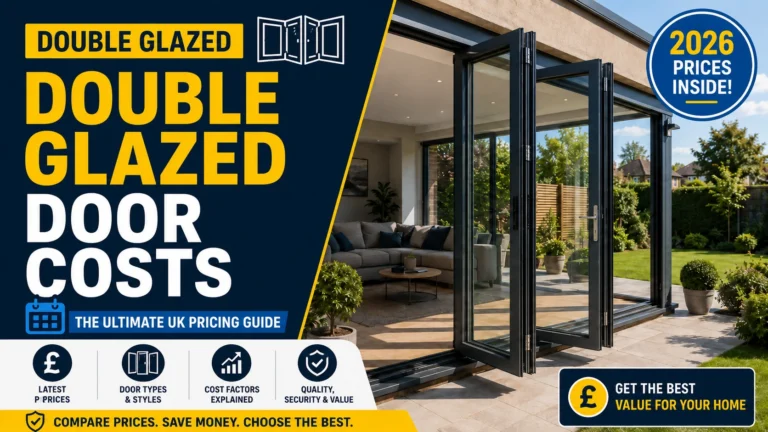
Bi-fold doors are made up of multiple panels, typically between two and seven, connected by hinges and suspended on an overhead track. When opened, the panels concertina to one or both sides, creating an unobstructed aperture that can span several metres. This makes them a particularly popular choice for rear extensions, open-plan kitchen-diners, and any room where the goal is to dissolve the boundary between inside and outside.
The accordion-style fold means bi-folds are ideally suited to wide openings where a single or double door would feel visually inadequate. They flood rooms with natural light and, when fully retracted, create a sense of space that is hard to replicate by any other means.
Sliding Patio Doors: Sleek, Space-Efficient, and Contemporary
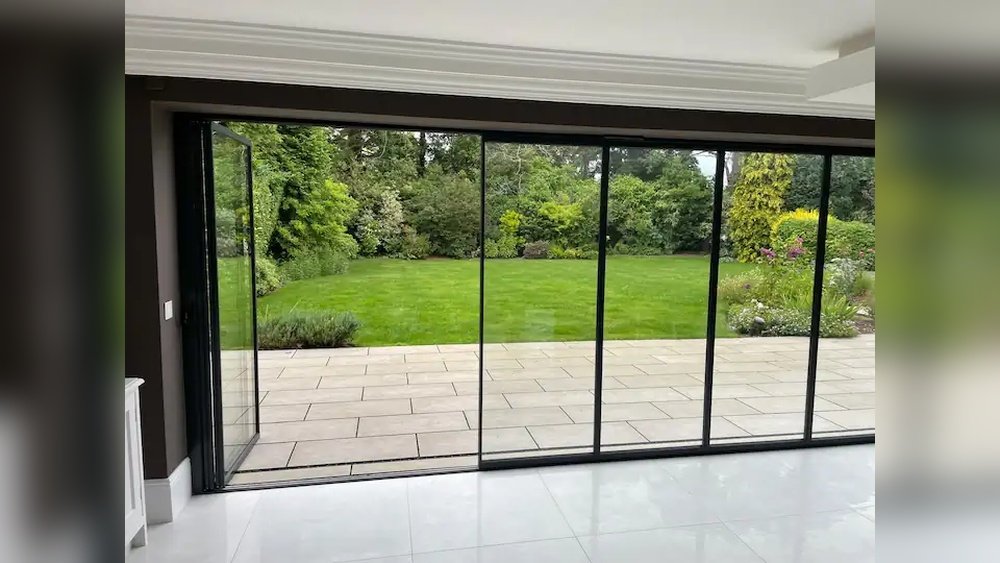
Sliding doors operate on a straightforward principle: two or more large glass panels glide horizontally along top and bottom tracks. Unlike bi-folds, they require no stacking space because each panel simply passes behind its neighbour. This makes them the go-to option for tighter external spaces (a narrow terrace, for example) or for homeowners who prefer an ultra-clean, minimal aesthetic with large uninterrupted glazed panels and slim sightlines.
Modern sliding systems have moved well beyond the bulky aluminium frames of the 1980s and 1990s. Today’s designs feature slim profiles that maximise the glass-to-frame ratio, bringing a distinctly architectural quality to otherwise ordinary rear elevations.
UK Pricing: What to Budget in 2026
Understanding the cost landscape is essential before you commit. Prices vary significantly based on size, material, glazing specification, and installer.
Bi-Fold Doors
- Entry-level uPVC systems: £3,000–£5,000 supplied and fitted
- Mid-range aluminium (thermally broken): £5,000–£8,000
- Premium bespoke aluminium or timber: £8,000–£12,000+
Sliding Patio Doors
- Standard uPVC two-panel system: £1,000–£2,000 supplied and fitted
- Aluminium sliding doors: £2,000–£4,000
- Large-format or lift-and-slide systems: £4,000–£7,000+
For a detailed breakdown of 2026 pricing across door types, see our guide to double-glazed door costs.
A note on buyer regret: One of the most common regrets homeowners report is under-specifying glazing performance on large doors prioritising upfront cost over long-term energy efficiency. With bi-folds and sliders covering significant wall area, even a modest improvement in U-value can meaningfully reduce heat loss and heating bills year on year. It is almost always worth stretching the budget here rather than on hardware finishes.
It is also worth noting that patio doors and windows are excluded from the 0% VAT relief on energy-saving materials under current HMRC rules. The relief applies to items such as insulation, solar panels, and heat pumps — not glazed door installations. See gov.uk/guidance/vat-on-energy-saving-materials-and-heating-equipment-notice-7086 for the full list of qualifying materials.
Energy Efficiency: U-Values, Ratings, and Running Costs
Energy performance is one of the most consequential decisions you will make when choosing patio doors. A poorly specified system can become a significant source of heat loss, particularly given the scale of glazing involved with bi-folds and large sliders.
The key metric is the U-value: the lower the figure, the better the door’s resistance to heat transfer. Under current Building Regulations (Approved Document L), replacement doors in existing dwellings must achieve a maximum U-value of 1.4 W/m²K. However, the best performing systems on the market featuring triple glazing or advanced thermally broken aluminium frames can reach 0.8 W/m²K or below.
The Energy Saving Trust advises that upgrading from single-glazed patio doors to an A-rated double-glazed system can reduce heat loss through that opening by up to 50%, contributing meaningfully to lower energy bills over time. With the UK government’s Future Homes Standard due to raise the bar on new-build thermal performance from 2025 onwards, specifying high-performance glazing now also future-proofs your property against increasingly stringent requirements details of which are available at gov.uk/building-regulations-approval.
When comparing products, look for the BFRC Window Energy Rating an A++ to E scale that provides a consumer-friendly summary of overall energy performance. The Glass and Glazing Federation (GGF) provides guidance on interpreting these ratings and verifying manufacturer claims.
Practical tips to maximise energy efficiency:
- Specify warm-edge spacer bars rather than standard aluminium spacers: they reduce condensation and improve the edge U-value
- Low-emissivity (Low-E) coatings on the inner glass pane dramatically cut radiant heat loss
- Argon or krypton gas-filled units outperform air-filled equivalents
- Thermally broken aluminium frames are essential for bi-folds: the thermal break separates the inner and outer aluminium profiles, preventing cold bridging
For independent cost comparisons and energy savings data, GreenMatch maintains a regularly updated patio door pricing guide.
Security: PAS 24 and What It Means for You
Large glazed openings are an obvious point of vulnerability if not properly specified. PAS 24 is the British Standard for enhanced security performance in doors and windows, and it is the benchmark that insurers and security professionals look for. A door that achieves PAS 24 certification has been independently tested to resist a range of physical attack methods including drilling, levering, and manipulation of locking mechanisms.
Secured by Design (the official police initiative) lists PAS 24-compliant products that have achieved their accreditation, and checking their database before purchasing is strongly recommended. According to ONS crime and justice statistics, the majority of domestic burglaries still involve forced entry through doors and ground-floor windows, making the quality of your patio door hardware far from a trivial concern.
The Association of British Insurers (ABI) notes that many household insurers require PAS 24-compliant door systems as a minimum condition of cover for properties with large glazed openings. Fitting a non-compliant system may affect your ability to make a successful claim in the event of a break-in a risk that can invalidate cover at the point you need it most.
Key security features to specify:
- Multi-point locking along the full height of the door
- Anti-lift pins or bolts to prevent panels being lifted off their tracks
- Shoot bolts top and bottom on bi-fold master doors
- Toughened or laminated safety glass as standard
- Hinge reinforcement on folding panels to prevent hinge-side attacks
For a more detailed look at protecting your home, read our guide on patio door security: how to burglar-proof your sliding and French doors.
Building Regulations: What You Need to Know
Installing bi-fold or sliding patio doors in place of an existing opening is generally considered a permitted development and does not require planning permission provided the property is not listed and the work falls within standard parameters. However, Building Regulations approval is a separate matter and is almost always required for replacement glazing work.
Under the Competent Person Scheme, a registered installer can self-certify their own work, meaning you do not need to apply to your local authority directly. The two main certification bodies in the UK are:
- FENSA: one of the UK’s main competent person schemes for replacement windows and doors, with over 13 million certificates issued since 2002
- Certass: an alternative government-authorised scheme with similar scope and standing
Both schemes ensure that work complies with Approved Document L (energy efficiency) and relevant glazing safety requirements under Building Regulations. If you are enlarging an existing opening to accommodate wider bi-fold or sliding doors, structural work will be involved typically a new steel or reinforced concrete lintel. This work will require a separate Building Regulations application and, depending on the scale of the project, may involve a structural engineer’s calculations.
Always confirm your installer’s certification status before work begins, and retain your FENSA or Certass certificate: it is a legal requirement to disclose this documentation when selling your property.
For general consumer guidance on navigating the regulations and certifications process, MoneySavingExpert covers grants, finance options, and practical tips for home improvement projects.
Material Comparison: Aluminium vs uPVC for Bi-Folds
The choice of frame material has a profound effect on performance, aesthetics, and long-term value. For bi-fold doors specifically, where the structural demands of spanning large openings are considerable, the debate largely comes down to aluminium versus uPVC.
Aluminium Bi-Folds
Aluminium is the premium choice for a reason. Its superior strength-to-weight ratio allows for significantly slimmer frame profiles, meaning more glass and better sightlines. It is dimensionally stable over time, resisting the warping and bowing that can affect uPVC in extreme temperatures. Powder coating in any RAL colour means aluminium bi-folds can be precisely matched to brickwork, render, or interior schemes. Maintenance is minimal: a periodic clean and an occasional check of hardware is all that is typically required.
The trade-off is cost: aluminium bi-folds are consistently more expensive than their uPVC equivalents, often by a significant margin. For the performance and aesthetic gains, most homeowners with large openings consider this justified.
uPVC Bi-Folds
uPVC is more affordable and thermally competent at entry-to-mid-level specifications. Modern uPVC profiles with reinforced steel cores can perform adequately in standard domestic bi-fold applications. However, the frame profiles are generally bulkier, which reduces the glass-to-frame ratio and can make the overall appearance feel heavier. uPVC is also more limited in terms of colour options, though foiled finishes now offer a reasonable approximation of the aluminium aesthetic.
For bi-folds spanning more than three or four metres, or where a premium architectural finish is a priority, aluminium is the clear recommendation. For budget-conscious projects with more modest aperture sizes, a well-specified uPVC system with thermally broken profiles and quality hardware can deliver solid performance.
| Feature | Aluminium | uPVC |
|---|---|---|
| Frame slimness | Excellent | Moderate |
| Strength | Superior | Good (with steel reinforcement) |
| Colour options | RAL full range | Limited (foils available) |
| Thermal performance | Excellent (thermally broken) | Good |
| Longevity | 40+ years | 20–35 years |
| Typical bi-fold cost | £5,000–£12,000+ | £3,000–£6,000 |
| Maintenance | Very low | Low |
Bi-Fold vs Sliding Patio Doors: Which Is Right for Your Home?
Having weighed all of the above, the decision often comes down to three practical questions:
How wide is your opening? For spans above four metres, bi-folds deliver a more dramatic and functional result. For narrower openings, a high-quality sliding system often looks and performs better.
What is your priority: maximum opening or seamless glass? Bi-folds open fully but involve more hardware and visual complexity. Sliding doors offer a cleaner aesthetic at the cost of a smaller functional opening.
What is your budget? Sliding doors offer excellent value at lower price points. If budget allows, aluminium bi-folds represent one of the highest-impact investments you can make in a rear extension or open-plan living space.
Whichever system you choose, ensure your installer is FENSA or Certass registered, that the product achieves PAS 24 security certification, and that the glazing specification meets or exceeds current U-value requirements. Get at least three quotes, ask to see physical samples of the frame profiles, and take your time. This is a significant investment that will shape how you live in your home for decades to come.
How to Get Accurate Quotes Without Overpaying
Most homeowners overpay simply because they do not compare like-for-like specifications. One installer’s “aluminium bi-fold” may include a thermally broken profile with triple glazing; another’s may not. The headline price tells you very little without the detail behind it.
To protect yourself and get genuinely comparable quotes:
- Request at least three quotes from FENSA or Certass-registered installers
- Ask for U-values in writing, not just “double-glazed”
- Confirm PAS 24 compliance is included as standard, not an optional upgrade
- Check whether installation, scaffolding, waste removal, and VAT are included in the stated price
- Compare frame profile thickness and hardware brand, not just the bottom line
For a fast starting point, you can compare verified installers and get an instant estimate at doubleglazingquote.net/double-glazing-cost-calculator-uk.
Frequently Asked Questions
Are bi-fold doors better than sliding doors? Neither is objectively better — it depends on your opening size, space, and priorities. Bi-fold doors are the stronger choice for wide openings of four metres or more, where the ability to fully retract panels creates a genuinely open connection to the outside. Sliding doors perform better in narrower spaces or where a clean, uninterrupted glass aesthetic is the priority. Both can achieve excellent energy efficiency and security when properly specified.
Which is cheaper, bi-fold or sliding patio doors? Sliding doors are consistently less expensive. A standard uPVC sliding system typically costs £1,000 to £2,000 supplied and fitted, while entry-level bi-fold doors start from around £3,000. The gap widens with aluminium: sliding aluminium doors run £2,000 to £4,000, compared to £5,000 to £12,000 or more for aluminium bi-folds. The higher cost of bi-folds reflects the greater number of panels, more complex hardware, and more involved installation.
Do patio doors need FENSA certification? Yes, in most cases. When replacing existing patio doors in England and Wales, the installation must comply with Building Regulations, specifically around energy efficiency. Using a FENSA or Certass-registered installer means they can self-certify the work on your behalf, so you do not need to apply to your local authority separately. You will receive a certificate on completion, which you are legally required to provide when selling your property. If your installer is not registered with a competent person scheme, you will need to apply for Building Regulations approval directly.
Are aluminium bi-fold doors worth it? For most homeowners, installing bi-folds across a significant opening, yes. The premium over uPVC buys you slimmer sightlines, greater structural stability over time, a full RAL colour palette, and a lifespan of 40 years or more with minimal maintenance. The visual difference between aluminium and uPVC bi-folds is particularly noticeable at larger widths, where uPVC profiles can look heavy and reduce the glass area meaningfully. If budget is the primary constraint, a well-specified uPVC system can still perform well in smaller applications.