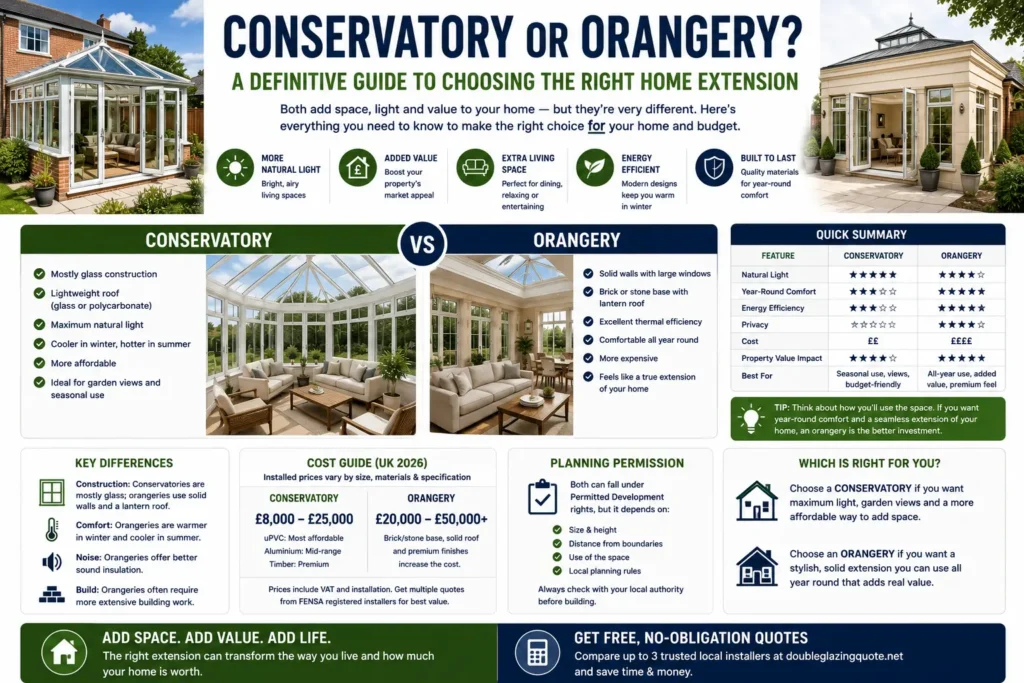
Thinking about adding space and light to your home but torn between a conservatory and an orangery? You’re not alone. Across the UK, homeowners are investing in home extensions at record rates, driven by rising stamp duty costs and a competitive housing market that makes extending a far more attractive proposition than upsizing. Both conservatories and orangeries can completely transform your living area, but they come with very different price tags, planning requirements, and long-term returns.
This guide cuts through the confusion. We compare real UK costs, planning permission rules, energy performance (including U-values), property value impact, and everything else you need to make a confident, well-informed decision.
The UK Home Extension Market in 2025
The appetite for home extensions in the UK has never been stronger. According to findings from the 2025 UK Houzz Home Report via KBB Focus, renovation spend and homeowner investment in permanent extensions continues to climb year-on-year, with glazed extensions among the most frequently undertaken projects.
Some well-designed conservatories may deliver up to 100% ROI, depending on specification, property type, and local market conditions, making them one of the strongest-performing home improvements available to UK homeowners. Orangeries, while carrying a higher upfront cost, consistently achieve premium returns in the mid-to-upper property market.
Conservatory Basics: Design, Light, and Value
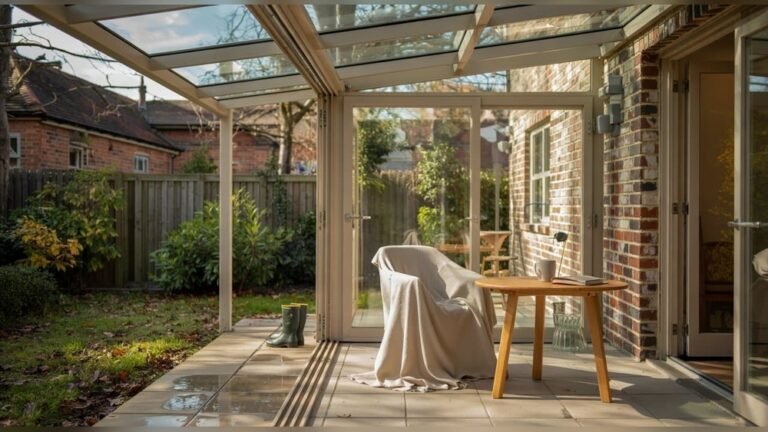
A conservatory is a glazed extension, typically featuring glass or polycarbonate roof panels and large glass walls set within uPVC, aluminium, or timber frames. The defining characteristic is light: conservatories flood interiors with natural daylight and deliver uninterrupted garden views year-round.
Design and Structure Traditional conservatory styles include Victorian, Edwardian, lean-to (or Mediterranean), and gable-end. Each suits different home types and garden orientations. Modern designs increasingly use slim aluminium frames with floor-to-ceiling glazing for a more contemporary aesthetic.
Light and View Benefits Large glass panels create bright, airy spaces that feel significantly larger than their footprint. Natural light improves mood and reduces daytime electricity consumption, benefits well-documented by the Energy Saving Trust.
Common Uses Conservatories function brilliantly as dining rooms, home offices, reading rooms, or casual lounges. Their adaptability makes them a perennial favourite. For guidance on eliminating the “too hot in summer, too cold in winter” problem that plagues many older conservatories, read our detailed guide: The All-Year-Round Conservatory: How Modern Glazing Technology Eliminates the Too Hot Too Cold Problem.
Orangery Features: Solid, Stylish, Substantial
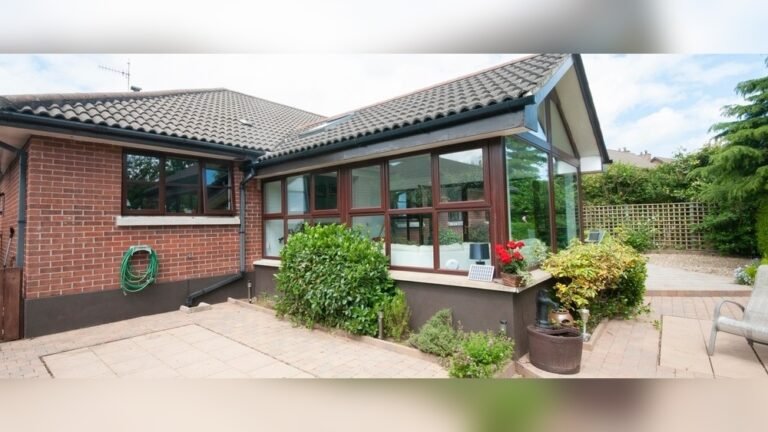
An orangery occupies the territory between a full brick extension and a conservatory. It uses solid masonry or rendered walls for the lower portion, with large windows or bifold doors, and a partially glazed roof typically featuring a central roof lantern.
Construction and Materials Orangeries are built with brick, stone, or rendered blockwork, the same materials as your main house. Timber or aluminium frames support the glazed roof and windows. This robust construction makes orangeries feel like a seamless part of the home rather than an add-on.
Roof and Wall Design The signature orangery roof combines solid insulated panels with a central glass lantern, allowing natural light while retaining far more heat than a fully glazed conservatory roof. Walls are largely solid, with large windows or French doors maintaining a visual connection to the garden without sacrificing thermal performance.
Aesthetic Appeal Orangeries suit period and traditional homes exceptionally well, though contemporary designs with clean lines and anthracite frames work beautifully on modern builds. Custom detailing including decorative cornices, pilasters, and bespoke lantern designs can elevate an orangery into a genuine architectural statement.
UK Pricing: What Does Each Option Actually Cost in 2025-26?
This is where many guides fall short by presenting costs that don’t reflect what UK homeowners are actually paying once labour, base preparation, and finishes are included.
Conservatory Costs: From Around £15,000 for a Full Installation
Entry-level figures of £5,000-£10,000 are sometimes quoted for supply-only or very small lean-to structures, but most full conservatory installations including base work, labour, glazing, and basic finishing now start closer to £15,000, with mid-range and premium builds running considerably higher.
| Specification | Typical UK Cost (Installed) |
|---|---|
| Basic lean-to / smaller uPVC | £8,000 – £15,000 |
| Victorian / Edwardian uPVC | £15,000 – £22,000 |
| Aluminium / timber framed | £18,000 – £28,000 |
| Premium bespoke design | £28,000 – £40,000+ |
Note: Costs vary significantly by region, site complexity, and specification. Always obtain multiple quotes from certified installers. For current indicative pricing, Ultraframe and similar manufacturers publish useful benchmark data.
Conservatories at the lower end typically use polycarbonate roofing, which performs poorly thermally and acoustically. Upgrading to a solid tiled roof or high-performance glazed roof dramatically improves year-round usability. Read our full guide here: The Ultimate Upgrade: Replacing Your Conservatory Roof for Maximum Thermal Performance and Value.
Orangery Costs: £25,000 to £50,000+
| Specification | Typical UK Cost |
|---|---|
| Smaller orangery (up to 15m²) | £25,000 – £32,000 |
| Mid-size orangery (15–25m²) | £32,000 – £42,000 |
| Large / bespoke orangery | £42,000 – £55,000+ |
The higher cost reflects the structural complexity of masonry walls, a more involved roof construction, and the skilled labour required for bricklaying and finishing work.
A note on VAT: Some qualifying energy-saving installations such as insulation and heat pumps currently benefit from 0% VAT until 31 March 2027. However, standard glazing and conservatory structures are not on the official qualifying list. Do not assume any VAT relief applies to your conservatory or orangery project. Confirm the VAT position for your specific installation with your contractor, and refer to GOV.UK VAT Notice 708/6 for the full list of qualifying materials.
Planning Permission: What the Rules Actually Say
This is one of the most misunderstood areas of home extensions in the UK, and getting it wrong can be costly.
Conservatories and Permitted Development
Most conservatories fall under Permitted Development (PD) rights, meaning you don’t need to apply for formal planning permission, provided your project meets specific criteria. Under the Planning Portal’s guidance on conservatories, a conservatory is generally permitted if it does not extend beyond the rear wall of the original house by more than 4 metres for detached homes or 3 metres for semi-detached and terraced properties, the total area does not exceed 50% of the land around the original house, the height does not exceed 4 metres, and it is separated from the house by external-quality walls, doors, or windows, which is a requirement also relevant to Building Regulations exemption.
If your property is in a Conservation Area, AONB, or is a Listed Building, PD rights are more restricted or removed entirely, and you will need a full planning application.
Orangeries and Full Planning Applications
Because orangeries use solid masonry construction and function as full structural extensions, they are far more likely to require formal planning permission. The same volume and dimension limits apply under PD rules, but the solid wall construction typically means Building Regulations approval is required regardless of size.
A full planning application currently costs £258 in England as of 2025 and typically takes 8 weeks to determine. Always check with your local planning authority before committing to a design.
Building Regulations
Building Regulations approval is a separate requirement from planning permission and applies differently to each structure. Conservatories that are under 30m², at ground level, separated from the main house by walls, doors, or windows of external quality, and independently heated rather than fed from the main home’s heating system are generally exempt from Building Regulations, provided the glazing is safety glass and any electrical work complies with Part P. The Planning Portal’s Building Regulations guidance for conservatories sets out these criteria clearly.
Orangeries are treated as full extensions and must comply with Building Regulations in full, covering structural integrity (Part A), fire safety (Part B), thermal performance (Part L), and ventilation (Part F).
Full Building Regulations approval for an orangery typically adds £500-£1,500 to project costs via a local authority or approved inspector. Full details are available at GOV.UK Building Regulations Approval. The forthcoming Future Homes Standard will also tighten thermal performance requirements, which is worth factoring into your specification now if building in 2025-26.
Energy Efficiency: U-Values Compared
Energy performance is increasingly central to this decision, both for comfort and running costs. The key metric is the U-value, which measures the rate at which heat passes through a structure. Lower is better.
| Component | Older Conservatory | Modern Conservatory | Orangery |
|---|---|---|---|
| Roof (polycarbonate) | 1.8 W/m²K | — | — |
| Roof (double glazed) | — | 1.1–1.4 W/m²K | 0.18–0.28 W/m²K (solid) |
| Walls (glass) | 2.0–2.8 W/m²K | 1.0–1.4 W/m²K | — |
| Walls (masonry) | — | — | 0.18–0.30 W/m²K |
| Glazing (windows/doors) | 2.8 W/m²K | 1.0–1.2 W/m²K | 1.0–1.2 W/m²K |
The Energy Saving Trust recommends a roof U-value of 0.18 W/m²K or lower for optimal thermal performance, which is easily achievable with an orangery’s solid insulated roof panels but difficult with any fully glazed conservatory roof.
That said, modern conservatories have closed the gap significantly. High-performance double and triple glazing, thermally broken aluminium frames, and smart climate management features are increasingly common in higher-spec conservatory installations, including automated roof vents, remote-controlled blinds, and app-linked heating, all of which dramatically improve year-round usability.
For installer certification, always use a FENSA-registered or Certass-certified installer. These schemes ensure your glazing meets current Building Regulations and provide the certificates you will need when selling your home. The Glass and Glazing Federation (GGF) also maintains a vetted installer directory and useful performance guidance.
Property Value Impact: Which Adds More?
Both structures add value, but in different ways and at different price points.
Conservatories, at the right specification, may deliver up to 100% ROI depending on specification, property type, and local market conditions, meaning a £15,000-£18,000 conservatory could add equivalent or greater value to your home. This is particularly true in the family home market covering 3 and 4 bed semis and detached homes where extra living space commands a consistent premium. However, a poorly specified conservatory, particularly one with a polycarbonate roof, can deter buyers if it appears unusable in hot or cold weather.
Orangeries tend to add stronger absolute value in higher-value properties. A well-designed orangery on a property worth £400,000-£600,000 can add £35,000-£55,000 in market value, a strong return even accounting for the higher build cost. Estate agents consistently report that orangeries are perceived by buyers as genuinely part of the house rather than a bolted-on addition, which drives stronger valuations.
For maximum ROI relative to spend, a well-specified conservatory wins at the lower price point. For maximum absolute value addition in a mid-to-upper market home, an orangery is the stronger long-term investment.
Case Studies: Real UK Projects and Costs
Case Study 1: Victorian Semi in Surrey, Conservatory Upgrade A homeowner replaced a deteriorating polycarbonate-roof conservatory with a new aluminium-framed structure featuring a solar-control glazed roof and underfloor heating. Total cost: £17,500. The estate agent’s revised valuation increased the property estimate by approximately £18,000. The room is now used daily as a home office and dining space across all four seasons.
Case Study 2: Detached Period Home in Cheshire, New Orangery Build A period farmhouse conversion gained a 22m² brick-built orangery with a traditional roof lantern, bifold doors, and limestone flooring. Total project cost: £41,000 including planning fees and Building Regulations approval. A subsequent estate agent appraisal increased the asking price by an estimated £47,000, representing a strong positive return on a premium property.
Case Study 3: 1970s Detached in Berkshire, Mid-Range Conservatory A lean-to conservatory with aluminium frames and a solid tiled roof panel was installed under Permitted Development. Total cost: £16,500. Used primarily as a family playroom, it added an estimated £15,000-£17,000 to the property’s value, broadly consistent with the 100% ROI benchmark at this price point.
Choosing the Right Option: A Quick Decision Framework
| Factor | Choose a Conservatory | Choose an Orangery |
|---|---|---|
| Budget | Under £25,000 | £30,000+ available |
| Home style | Modern or flexible | Period, traditional, or upmarket |
| Planning appetite | Prefer Permitted Development | Happy to navigate full planning |
| Energy priority | Modern glazed roof acceptable | Highest thermal performance required |
| Primary use | Occasional / semi-seasonal | Year-round primary living space |
| ROI focus | Best return relative to spend | Highest absolute value addition |
Expert Tips Before You Commit
Get at least three quotes from FENSA-registered or Certass-certified installers. Prices can vary by 30-40% for equivalent specifications.
Verify your PD status first. Use the Planning Portal’s interactive guidance before spending money on design or survey fees.
Prioritise the roof specification. For a conservatory, this single element has more impact on year-round usability than anything else. For an orangery, the roof lantern size and glazing quality determine how much natural light reaches the interior.
Budget for the finish. Both structures benefit significantly from quality flooring, blinds, and heating. Allow an additional 10-15% of the build cost for these elements.
Use impartial consumer resources. Which? and MoneySavingExpert carry useful, unsponsored guidance on financing options and avoiding common installer pitfalls. GreenMatch provides regularly updated cost comparisons if you want to benchmark the quotes you receive.
Frequently Asked Questions
What is the downside of an orangery? The primary downsides are cost and the planning process. Orangeries are significantly more expensive than conservatories and almost always require Building Regulations approval, and often full planning permission too. They also take longer to build, typically 8-14 weeks versus 3-5 weeks for a conservatory.
Do I need planning permission for a conservatory in the UK? Most conservatories qualify for Permitted Development and don’t require a formal planning application, provided they meet size, height, and separation criteria. Always verify via the Planning Portal before proceeding.
Which adds more value, a conservatory or an orangery? Conservatories offer the best ROI relative to spend, with some well-designed projects potentially returning up to 100% depending on specification and local market. Orangeries add more absolute value in higher-value properties. The right choice depends on your property’s price bracket and your target buyer market.
Are conservatories usable year-round now? Yes. With modern glazing, thermally broken frames, and smart climate management features increasingly common in higher-spec installations, today’s conservatories bear little resemblance to the uncomfortable glass boxes of the 1990s.
Conclusion
Choosing between a conservatory and an orangery comes down to four core factors: budget, property type, planning appetite, and intended use. Conservatories offer faster installation, Permitted Development eligibility, and strong ROI potential, particularly at the £15,000-£25,000 price point with a quality roof specification. Orangeries deliver superior thermal performance, a more seamless architectural integration, and stronger absolute value in higher-value properties, at a cost of £25,000-£50,000+ and a more involved planning and regulatory process.
Whatever you choose, work with certified professionals, invest in quality glazing and insulation, and weigh the long-term picture alongside the upfront cost.
Ready to explore your options? Get a free, no-obligation quote from certified installers in your area at doubleglazingquote.net.
Sources: Energy Saving Trust | Planning Portal | GOV.UK Building Regulations | GOV.UK VAT Notice 708/6 | FENSA | Certass | GGF | Which? | MoneySavingExpert | GreenMatch | KBB Focus / 2025 UK Houzz Home Report