Is your conservatory feeling unbearably hot in summer and cold in winter? You’re not alone. Thousands of UK homeowners struggle with conservatories that fail to deliver the year-round comfort they were promised. But here’s the good news: replacing your conservatory roof can transform that neglected space into a cosy, functional retreat while adding genuine, measurable value to your property.
Imagine using your conservatory in every season without sky-high energy bills. This upgrade is more accessible and more affordable than you might expect. Keep reading to discover how the right roof replacement can maximise thermal performance, satisfy UK building regulations, and deliver a real return on your investment.
The Financial Case: ROI and Property Value
Before diving into materials and regulations, it’s worth understanding why this upgrade makes financial sense. Some property commentators suggest a well-designed conservatory can improve buyer appeal, but the return depends heavily on location, build quality, and whether the room is genuinely usable year-round. The 2025 UK Houzz Home Report highlights sustained homeowner investment in renovation spending, reflecting a broader trend of improving existing spaces rather than moving, and a thermally comfortable conservatory is increasingly central to that thinking.
Replacing a failing polycarbonate or single-pane glass roof with a thermally efficient alternative repositions the room as a functional living space rather than a seasonal add-on. Estate agents consistently report that buyers discount or disregard conservatories that overheat in summer or frost over in winter. A modern, insulated roof removes that objection entirely.
Benefits of a New Conservatory Roof
Improved Thermal Comfort
A new roof uses modern insulation materials that keep heat inside during cold months and block unwanted solar gain in warmer weather. The result is a steady, comfortable temperature throughout the year with no more chilly mornings or sweltering afternoons.
Enhanced Energy Efficiency
Better insulation means your heating system works less hard. The Energy Saving Trust notes that improving the thermal performance of your home’s building fabric is one of the most effective ways to reduce energy consumption and cut bills. A roof with a low U-value (a measure of heat loss, where the lower the better) can make a significant dent in annual heating costs.
You may also benefit from 0% VAT on qualifying energy-saving materials, which currently applies until 31 March 2027, after which the rate is scheduled to revert to 5%. Check HMRC’s VAT information for energy-saving materials for the full criteria. Whether your chosen roof system qualifies will depend on the specific materials and how the installer invoices the work, so always confirm this directly with your installer before assuming the relief applies.
Increased Property Value
A functional, energy-efficient conservatory is a genuine selling point. Replacing a tired roof is a smart investment for future returns, particularly in a market where buyers are increasingly focused on running costs and thermal comfort.
Do You Need Planning Permission or Building Regulations Approval?
This is one of the most commonly misunderstood areas of conservatory improvement in the UK, and getting it wrong can cause real problems when you come to sell.
Planning Permission
In most cases, replacing a conservatory roof on a like-for-like basis does not require planning permission, as it falls under permitted development. However, if you are converting a traditional glazed or polycarbonate roof to a solid tiled roof, the situation is less straightforward. Changing the roof type can alter the overall height or appearance of the structure in ways that may require consent.
The Planning Portal provides detailed guidance on what qualifies as permitted development. As a general rule, the 10-year rule applies: improvements made within ten years of the conservatory being built typically do not require full planning permission, provided the structure remains within the original footprint and height restrictions. Always check with your local authority before proceeding, particularly if your property is in a conservation area or is listed.
Building Regulations
This is where many homeowners are caught out. Under GOV.UK Building Regulations, a conservatory is exempt from full building regulations only if it meets specific conditions, including being separated from the main house by external-quality walls, doors, or windows, and having an independently controlled heating system.
Replacing the roof with a solid tiled or insulated system can remove that exemption, because the structure may then be treated as a conventional extension rather than a conservatory. In that case, the new roof will need to comply with current Part L (energy efficiency) and Part A (structural integrity) requirements.
For a solid roof replacement, the correct route is to apply for Building Control approval through your local authority, or to use an approved inspector. Unlike replacement windows or doors, conservatory roof conversions do not fall within the scope of schemes such as FENSA or Certass, as those schemes cover replacement glazing units, not structural roof changes. Your installer should be familiar with this process; if they are not, treat that as a warning sign. Always ask for documentation confirming compliance before making final payment.
The Glass and Glazing Federation (GGF) provides broader industry standards and best practice guidance for the glazing sector.
Types of Conservatory Roofs: UK Pricing Comparison
Choosing the right roof depends on your budget, your aesthetic preferences, and your thermal performance goals. Here is a practical comparison of the main options available in the UK market.
| Roof Type | Typical UK Cost | U-Value | Key Benefit |
|---|---|---|---|
| Polycarbonate | £1,000–£2,500 | ~2.5–3.0 | Low cost, lightweight |
| Glass (double/triple glazed) | £2,500–£5,000 | ~1.0–1.6 | Maximum natural light |
| Hybrid (glass + solid panels) | £3,500–£6,500 | ~0.8–1.2 | Balance of light and insulation |
| Solid tiled | £4,500–£8,000+ | ~0.18–0.28 | Best thermal performance |
To put that in perspective: a typical 3m x 3m conservatory upgrading from a standard polycarbonate roof to a solid tiled system can reduce winter heat loss through the roof by over 70%, based on the difference in typical U-values between the two materials. For a room that was previously too cold to use between October and April, that is a meaningful change in how the space functions day to day.
Typical overall replacement cost: £3,000–£8,000, depending on the size of your conservatory, the material selected, and regional labour rates. Always obtain at least three quotes from reputable installers. Which? offers useful consumer guidance on vetting installers and what to ask before signing a contract.
For guidance on financing options or spreading the cost, MoneySavingExpert’s home improvement loans guide covers personal loans, secured borrowing and alternatives. Some energy efficiency upgrades may also qualify for government support, so it is worth checking the Energy Saving Trust for the latest available funding information.
Maximising Comfort Year-Round
Heat Retention in Winter
A solid or hybrid roof with modern insulation significantly reduces heat loss. Double or triple glazing combined with insulated roofing panels helps maintain a stable indoor temperature even during the coldest months. Paired with a properly zoned heating system, your conservatory can become one of the most comfortable rooms in the house. For more on how modern glazing technology addresses the too-hot, too-cold problem, read our in-depth guide: The All-Year-Round Conservatory: How Modern Glazing Technology Eliminates the Too Hot, Too Cold Problem.
Smart Climate Control
Technology is transforming how homeowners manage conservatory environments. Smart climate control, integrating automated roof vents, underfloor heating, and app-controlled blinds or glazing tints, is increasingly common in premium installations. These systems respond dynamically to temperature changes, maintaining comfort without manual intervention. If you’re investing in a full roof replacement, it’s worth asking your installer whether smart climate integration is compatible with your chosen system.
Cooling Solutions for Summer
Modern roofs often include reflective coatings or solar-control glass that significantly reduce heat absorption. Tinted glazing panels can cut glare and radiant heat without sacrificing natural light. Combined with roof vents or automated ventilation, this reduces dependency on electric fans or air conditioning, lowering energy use and running costs. GreenMatch provides useful cost comparison data for energy-efficient glazing products if you want to assess the options before speaking to an installer.
Seasonal Pricing and Long-Term Savings
Roof replacement costs fluctuate with demand. Late autumn and winter typically see lower pricing due to reduced competition for installer time. Booking during off-peak periods can result in meaningful savings. Longer term, the reduced energy consumption from a well-insulated roof, combined with potential VAT relief on qualifying products, means the investment pays for itself progressively over time.
Maintenance and Longevity
A new roof requires relatively modest maintenance: periodic cleaning with a soft brush and mild detergent, inspection of seals and joints, and keeping gutters clear. Watch for discolouration, cracking, condensation between panes, or water staining inside the conservatory, as these are early warning signs that warrant professional attention. Most quality installations come with manufacturer warranties of 10 years or more; confirm the terms and keep all documentation safe.
Is a Conservatory Still the Right Choice?
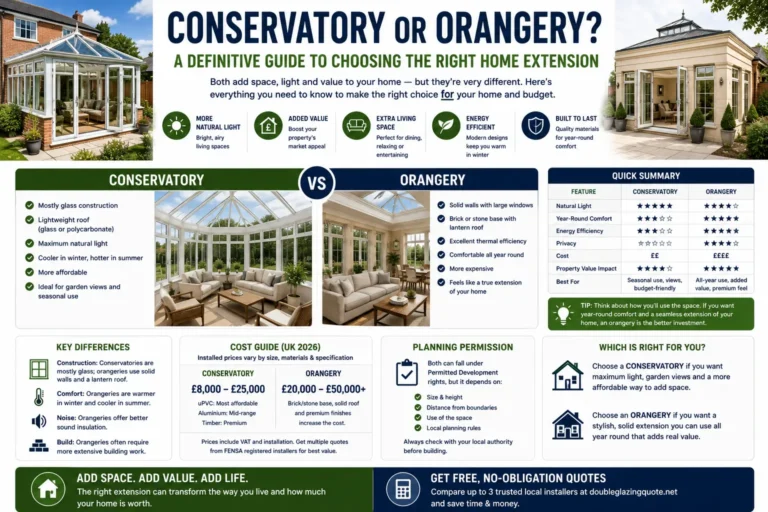
If you’re weighing up a conservatory roof upgrade against alternative extension options, our guide Conservatory or Orangery: A Definitive Guide to Choosing the Right Home Extension can help you think through the decision in full.
Conclusion
Replacing your conservatory roof is one of the most impactful home improvement investments you can make. It improves thermal comfort, cuts energy bills, satisfies modern building performance standards, and can meaningfully improve buyer appeal when the time comes to sell. Choose materials that match your needs and budget, verify the planning and building regulations position before work begins, and ensure your installer is familiar with the Building Control process for solid roof replacements. The result is a space you can genuinely enjoy throughout the year.
Sources: Energy Saving Trust | GOV.UK Building Regulations | HMRC VAT on Energy-Saving Materials | GGF | Which? – Choosing a Conservatory Company | MoneySavingExpert – Home Improvement Loans | GreenMatch | Planning Portal | KBB Focus / 2025 Houzz UK Home Report